


Lab automation
Accelerate discovery with factory lab automation
Overview
Re-thinking lab automation
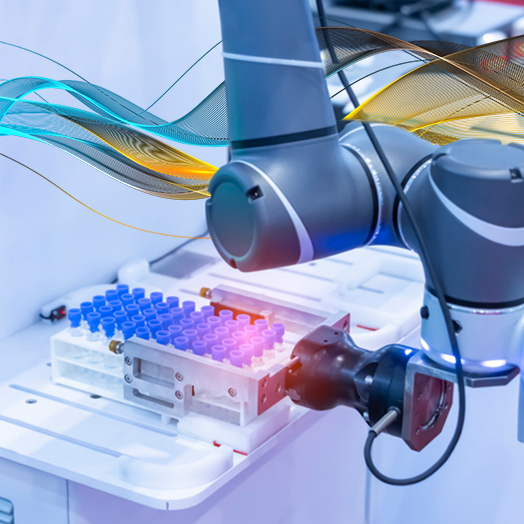
The laboratory landscape is navigating rapid scientific advancement, rising testing complexity, labor shortages, and stringent regulatory and quality requirements — all while managing mounting throughput demands and the growing need for high-throughput screening capabilities. Labs across diagnostics, research, bioprocessing, and clinical testing face workforce gaps, manual bottlenecks, and increasingly intricate workflows.
These challenges are accelerating the need for smarter, flexible lab automation that increases throughput, ensures compliance, enhances precision, and supports continuous innovation across sophisticated, high-stakes laboratory environments.
We solve
Industry challenges
- Manual bottlenecks and workflow inefficiencies
Many labs still rely on labor-intensive processes that slow throughput, increase error risk, and limit scalability. - Growing testing complexity and volume
Expanding test menus, higher sample volumes, and more intricate protocols create pressure on labs to process more work with fewer resources. - Stringent quality and regulatory requirements
Laboratories must meet rigorous standards for traceability, data integrity, sterility, and validation. - Labor shortages and skills gaps
Skilled lab technicians are increasingly difficult to find and retain. - Data digitization, AI & generative AI integration
Many laboratories operate with siloed systems and limited digital visibility. - Instrumentation and system integration
Labs often use equipment from multiple vendors that doesn’t integrate seamlessly, creating workflow fragmentation.
Capabilities
Improve efficiency, accuracy, and throughput across laboratory operations
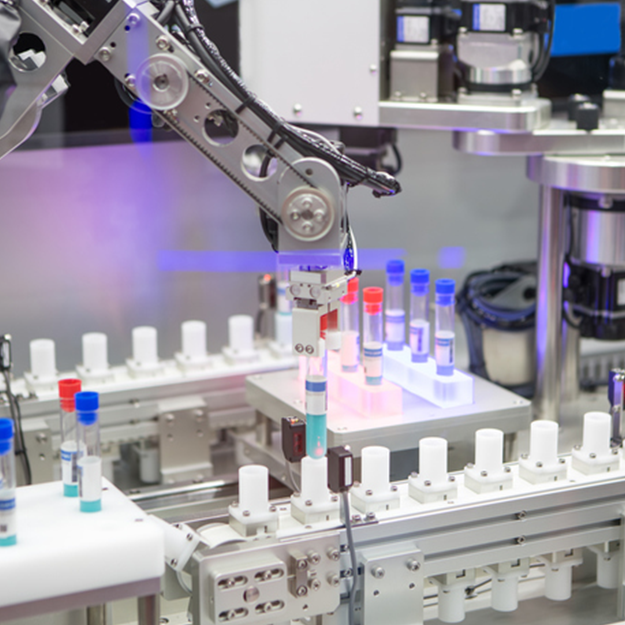
Eclipse designs and builds automation platforms that improve efficiency, accuracy, and throughput across laboratory operations. Our solutions include robotic processing systems, high-precision liquid handling, cleanroom logistics, and sample management platforms, all designed for repeatability, sterility, and full traceability.
By automating repetitive or high-precision tasks, labs can reduce human error, accelerate research and testing, and maintain compliance with regulatory standards. Our systems are flexible and scalable, integrating seamlessly with existing lab workflows, Laboratory Information Management System (LIMS) data platforms, and enterprise data systems to support both R&D and full-scale production environments.
Sample management systems
Automated solutions for tracking, handling, and storing samples with full traceability.
Cleanroom logistics
Material handling and conveyance systems designed for sterile lab environments.
Robotic processing
Automated robotic platforms for precision workflows such as pipetting, sorting, and dispensing.
Liquid handling systems
High-accuracy automation for liquid transfer, dosing, and preparation.
Packaging and consumables
Automation for lab consumables, packaging, and kitting with integrated inspection.
Data integration and connectivity
Seamless integration with LIMS, MES and enterprise data platforms for real-time data flow, traceability, reporting, and compliance.
Benefits
Why labs choose Eclipse
Our automated systems improve repeatability and reduce human error in critical lab processes. By standardizing workflows and capturing detailed process data, labs gain confidence in results while freeing staff to focus on higher-value tasks. This affirms consistency across experiments, testing, and production-scale operations.
Accuracy in every workflow
Our automated systems improve repeatability and reduce human error in critical lab processes.
Scalable research platforms
Our solutions are designed to move from R&D to production with minimal revalidation.
Trusted compliance
Our systems support strict lab standards, from cleanroom protocols to data traceability requirements.
FAQs
Frequently asked questions
What are the benefits of lab automation for research and diagnostic labs?
Automation increases workflow repeatability, reduces human error, accelerates throughput, and ensures regulatory compliance. It enables labs to scale from R&D to full production while maintaining accuracy and traceability in critical processes.
What robotic processes can Eclipse automate in laboratories?
Eclipse Automation builds robotic automation for high-precision lab workflows, including pipetting, sorting, dispensing, and liquid handling. These systems improve throughput, reduce human error, and maintain sterility for sensitive research and diagnostic applications.
How does Eclipse Automation improve sample management in labs?
Eclipse designs automated sample management systems that track, store, and transport samples with full traceability. These platforms reduce manual handling, prevent cross-contamination, and ensure accurate sample identification throughout the workflow.
How does Eclipse Automation ensure compliance in lab automation systems?
Eclipse designs systems to meet strict lab standards, including cleanroom protocols, traceability requirements, and data integrity regulations. Automated monitoring, integrated validation, and system controls help labs maintain regulatory compliance from pilot testing through full-scale operations.
How does Eclipse Automation support cleanroom logistics and material handling?
Eclipse integrates automated conveyance, sorting, and transfer systems compatible with sterile and controlled environments. This ensures smooth material flow, compliance with cleanroom protocols, and minimized contamination risk in laboratory operations.
Featured articles and insights
-
Life sciences manufacturing: Smarter, flexible automation for modern facilities
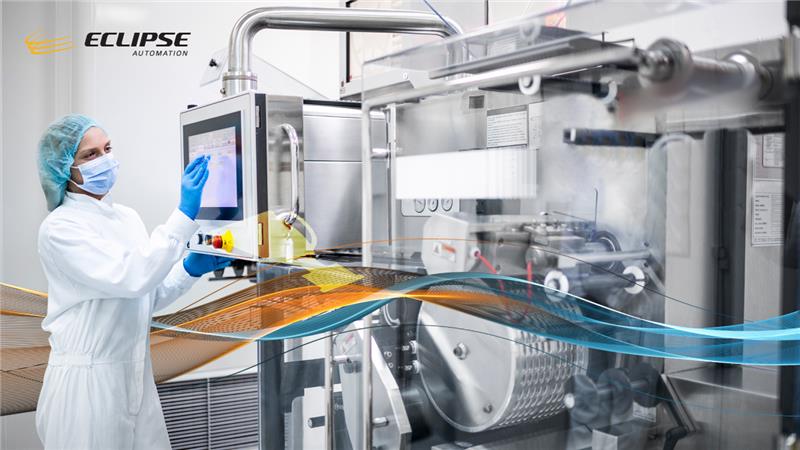
Life sciences automation enables flexible, compliant manufacturing for rapidly evolving medical technologies.
-
Consumer Manufacturing Overview
Modernize consumer products manufacturing across electronics, appliances, utilities, and more.
-

Industrial Automation Overview
Automation for durability, precision, and throughput across industrial manufacturing.
