

Life sciences factory automation
Accelerate life sciences innovation with intelligent factory automation.
Trusted by Factory leaders
Our clients are on





Overview
Re-thinking life sciences factory automation
The life sciences industry is navigating rapid technological advancements, regulatory pressures, labor shortages, and growing demand for precision and safety. Manufacturers across diagnostics, vision and eye care, drug delivery devices, lab automation, medical devices, and surgical instruments face rising workforce gaps, cost pressures, and complex production requirements. This drives the need for smarter, flexible life sciences factory automation that enhances throughput, ensures compliance, maintains quality, and supports continuous innovation across increasingly sophisticated and high-stakes manufacturing environments.

A holistic approach to automation is essential and to be successful, companies need to start with diagnostics, clarify the problem, and then design the full system (people, processes, and data) around automation. Think of it as a design process meant to use automation as a multiplier, not just a one-to-one replacement of a robot for a human, Automation is about using a multiplier to enhance your production.
Nicholas Yeo,
Senior Director, Tech Ops Robotics and Digital at Johnson & Johnson
Our Expertise
Automation solutions for life sciences and healthcare
Eclipse provides tailored life sciences factory automation solutions to meet the complex demands of life sciences manufacturing. From medical devices to diagnostics, drug delivery systems, and lab automation, our systems are engineered for high-precision, high-volume production while maintaining strict regulatory compliance, safety, and traceability.
By integrating robotics, inspection technologies, and data-driven monitoring, we help manufacturers improve throughput, reduce errors, and accelerate time-to-market. Our life sciences factory automation solutions are scalable, adaptable, and designed to support the full product lifecycle, from initial assembly and testing to packaging and lab operations.
Key areas of capability include:
Medical devices and surgical instruments
Automation for producing surgical tools, implants, catheters, and other high-precision devices with traceability and compliance built in.
Learn More >
Diagnostics
Systems for assembling and testing diagnostic cartridges, point-of-care devices, and consumables used in rapid and lab-based testing.
Learn More >
Vision and eye care
Automation for manufacturing contact lenses, surgical tools, and vision correction devices with high-volume repeatability.
Learn More >
Drug delivery devices and pharma
Solutions for producing injectors, inhalers, infusion pumps, and packaging systems that meet stringent regulatory standards.
Learn More >
Lab automation
Automated platforms for sample management, cleanroom logistics, robotic processing, and liquid handling to accelerate research and testing.
Learn More >
Life sciences
Capabilities
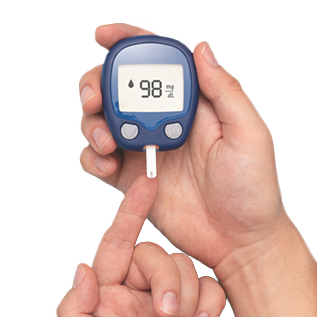

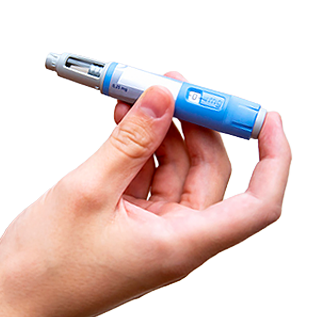
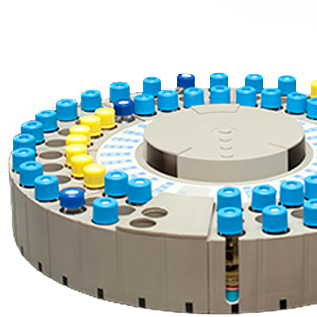
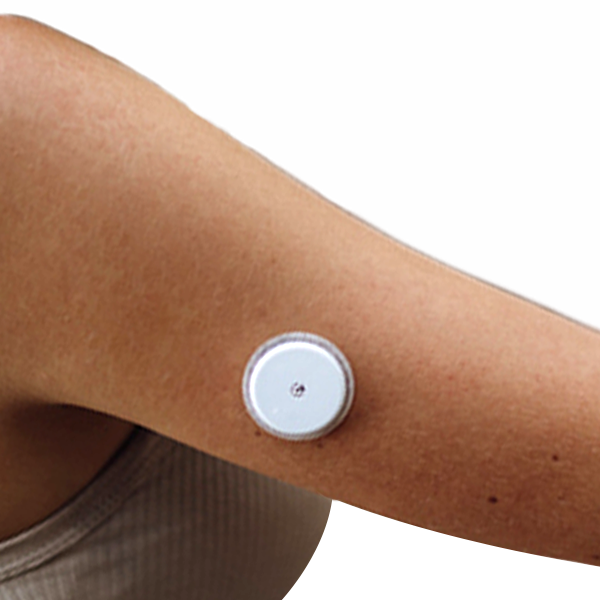
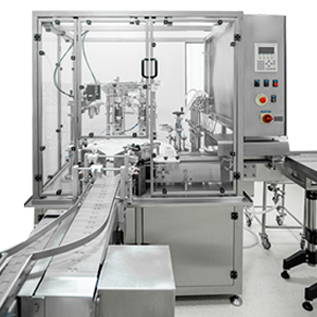
Watch the life sciences factory automation process
Smarter processes. Safer labs. Faster discoveries. Discover how factory automation is meeting the Life Sciences challenge. Watch the video.
Experience
- Point-of-care diagnostic cartridges
- Diabetes care (CGM & insulin deliver)
- Wearable monitoring devices
- Cardiac monitors
- Smart auto injectors
- Contact lenses
- Orthopedic implants
- Lab automation
- Medical device battery assembly
- IV tube sets
- Catheters
- Medical filters
- Bioprocessing bags
- Personal care products
- Surgical devices and tools
Specialized expertise
| Good Manufacturing Practices (GMP) | Design to cGMP ISO 9001 controlled procedures and documentation GAMP 5® procedures and documentation Easy to clean design Cleanroom compatibility |
| High precision, high speed automated assembly | Vision based active alignment Precision motion and tooling |
| High accuracy dispense system | Reagent dispense Epoxy dispensing Cyclohexanone dispensing Lyophilized bead dispensing |
| Test system | Precision leak testing Vision based defect inspection Electrical and hi-Pot testing |
| Track & trace applications | Smart factory SCADA compliant (21 CFR Part 11) MES compliant (21 CFR Part 11) |
| Plastic parts bonding technologies | UV, vapor and thermal cure epoxies Ultrasonic and radio frequency welding Ultrasonic bonding Heat staking Spin bonding |
Validation
Eclipse has developed a signature quality process utilizing ISO 9001:2015 controlled procedures and documentation recommended by the ISPE Good Automated Manufacturing Practice (GAMP 5® guidelines) and FDA cGMP. From the design and build through to testing and documentation, our validation protocols assure consistency, traceability, quality, and compliance to manage risk in highly regulated environments.
The Automation Lifecycle
Explore the Eclipse factory automation lifecycle
One partner. One process.
We bring your automation project to life—from strategy to launch and beyond. It all starts with smart planning: mapping your processes, validating ideas, and identifying the right solution.
This foundation fuels a proven end-to-end lifecycle that spans advanced engineer services (AES), pre-automation system development, vertical integration, and post-launch optimization. By aligning goals early and managing everything under one roof, you gain a faster, more confident path forward with reduced risk.
FAQ
Frequently Asked Questions
What types of devices and products benefit most from automation in life sciences?
High-precision medical devices, diagnostic cartridges, drug delivery systems, contact lenses, and lab consumables gain efficiency, repeatability, and compliance from automation.
What automation solutions does Eclipse Automation provide for diagnostics and lab operations?
Eclipse designs systems for assembling diagnostic cartridges, point-of-care devices, and consumables, as well as automated lab platforms for sample management, robotic processing, and liquid handling. These solutions accelerate testing, improve accuracy, and streamline research workflows.
How does automation improve research and testing in life sciences labs?
Automated platforms handle sample management, robotic processing, and liquid handling, accelerating workflows while reducing variability and contamination risks. Integration with MES and ERP systems allows real-time monitoring and analytics, improving lab efficiency and reproducibility of experiments.
How does Eclipse Automation ensure compliance and quality in life sciences manufacturing?
By integrating the full automation lifecycle — from advanced engineering and simulation to commissioning and post-automation optimization — Eclipse ensures systems meet regulatory requirements. MES and ERP integration provides real-time traceability and visibility, supporting consistent quality and efficient scale-up.
Featured articles and insights
-
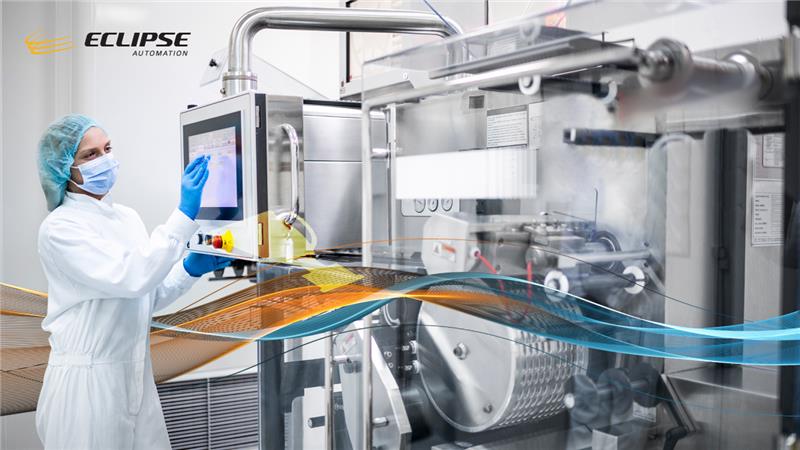
Life sciences manufacturing: Smarter, flexible automation for modern facilities
Life sciences automation enables flexible, compliant manufacturing for rapidly evolving medical technologies.
-

Consumer Manufacturing Overview
Modernize consumer products manufacturing across electronics, appliances, utilities, and more.
-

Industrial Automation Overview
Automation for durability, precision, and throughput across industrial manufacturing.
