

Industrial mobility factory automation
Boost industrial mobility with intelligent automation
Overview
Re-thinking industrial mobility factory automation
The industrial mobility sector is navigating rapid technological shifts, electrification, labor shortages, and stringent safety and quality requirements while managing global supply chain pressures. Manufacturers of construction vehicles, material handling equipment, and other industrial mobility platforms face rising labor gaps, cost constraints, and production complexity, driving the need for smarter, flexible factory automation that boosts throughput, ensures compliance, and supports continuous innovation across increasingly complex, high-stakes production environments.
We solve
Industry challenges
- Complex and diverse equipment manufacturing
Industrial mobility includes construction vehicles, material handling equipment, and specialized machinery, which require highly precise and adaptable manufacturing processes. - Labor shortages and skills gaps
Finding skilled operators and technicians is increasingly difficult. - Safety and regulatory compliance
Industrial mobility platforms operate in high-risk environments. Ensuring safety and meeting regulatory standards is critical, requiring automated monitoring and process controls. - Data digitization, AI & generative AI integration
Siloed legacy systems and manual processes hinder predictive maintenance, workflow optimization, and operational insights. - Scaling production and flexibility
Rapidly evolving market demands require factories to produce diverse equipment efficiently. - Cost and resource optimization
Rising material, energy, and operational costs put pressure on margins.
Our Expertise
Our solutions in industrial mobility factory automation
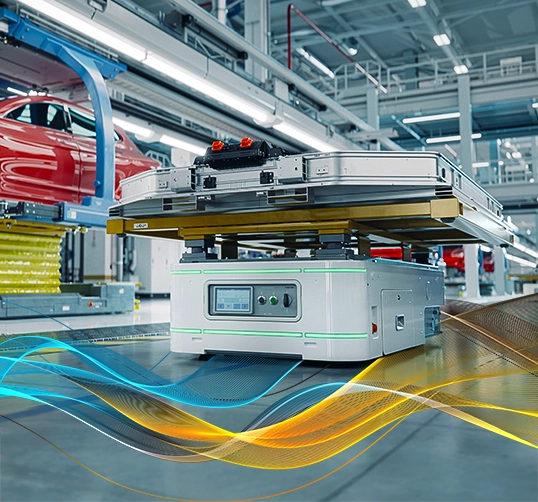
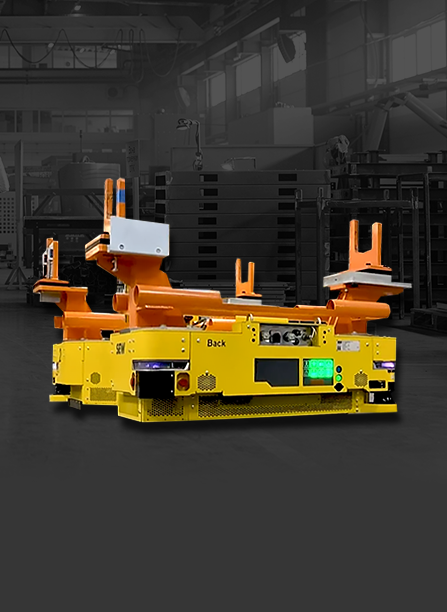
From Automated Guided Vehicles (AGVs) and Autonomous Mobile Robots (AMRs) to airport support vehicles and underground transport equipment, Eclipse supports the next generation of industrial mobility automation. Our shop-floor-to-top-floor, end-to-end automation systems improve efficiency, ensure quality, and accelerate production by giving manufacturers the tools to innovate faster in environments where durability, safety, and system intelligence are key and operational demands are constantly evolving.
Powertrain and electric drive integration:
Automate the assembly of compact e-drives, traction motors, and gearboxes used in industrial transport platforms.
Structural frame and chassis assembly:
Build robust frames using welding, riveting, and fastening systems tailored to withstand heavy-duty operational demands.
Battery module and pack assembly:
Deliver solutions for assembling and testing high-performance battery systems.
Vision and navigation system integration:
Integrate and calibrate advanced safety, sensor, and autonomy systems with precision.
Data systems and performance traceability:
Enable real-time monitoring, traceability, and diagnostics across each unit with integrated data architecture solutions.
FAQs
Frequently Asked Questions
Why is automation important for industrial mobility vehicle production?
Industrial mobility vehicles are often high-mix, low-volume products with complex systems such as electric drives, sensors, and autonomy technologies. Automation improves assembly precision, ensures safety, accelerates production, and allows manufacturers to scale operations efficiently while maintaining product quality in challenging industrial environments.
How does Eclipse Automation support industrial mobility vehicle manufacturing?
Eclipse provides end-to-end automation for industrial mobility systems, including AGVs, AMRs, airport support vehicles, and underground transport platforms. Our solutions integrate powertrain and electric drives, battery systems, structural frames, and advanced vision and navigation systems to ensure precision, durability, and scalable production.
What challenges are common in industrial mobility manufacturing?
Key challenges include integrating complex drive and sensor systems, assembling high-mix and low-volume products, meeting stringent safety and regulatory requirements, calibrating advanced navigation systems, and connecting IoT-enabled diagnostics for traceability. Automation helps overcome these challenges while improving throughput and reducing errors.
How does Eclipse Automation ensure traceability and performance monitoring for industrial mobility systems?
Eclipse integrates real-time data and IoT systems across each production unit, enabling full traceability, diagnostics, and performance monitoring. These data-driven systems help manufacturers track quality, ensure compliance with safety and regulatory standards, and optimize production processes for efficiency and consistency.
Featured articles and insights
-
Eclipse Automation Marks 25 Years with Strategic Expansion, New Partnerships, and Bold Vision for the Future of Factory Automation
Cambridge, Ontario — March 12, 2026, Eclipse Automation, a global leader in factory automation, today announced…
-
Consumer Manufacturing Overview
Modernize consumer products manufacturing across electronics, appliances, utilities, and more.
-

Industrial Automation Overview
Automation for durability, precision, and throughput across industrial manufacturing.
