




Automation has been steadily advancing the manufacturing industry – year after year since the late ’70’s. Robots, advanced software, and data-driven systems have improved productivity across industries.
But according to Adam Dorr, Director of Research at RethinkX, the current wave of technological progress is fundamentally different.
In the season finale of People B4 Machines, Dorr joins host Amanda Cupido to explore how artificial intelligence is accelerating automation faster than previous waves of industrial technology—shifting the conversation from whether automation will happen to how quickly organizations can adapt.
Key Takeaways
- AI in manufacturing is moving from software tools to physical machines in the real world.
- Seeing how humanoid robots could fit naturally into factories.
- What the next decade of automation adoption may look like.
- Why companies should experiment with AI and robotics now.
- How automation will change productivity and the future of work.
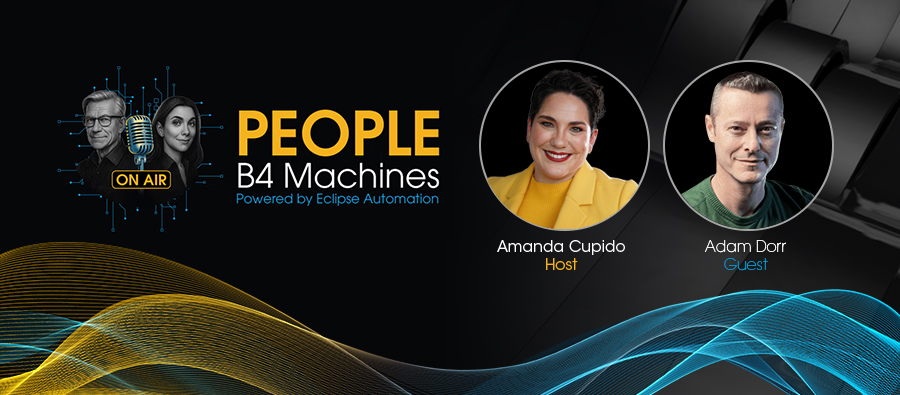
Listen to the full conversation
Hear Adam Dorr’s full episode, Factory reset: The machines are ready — are we?, and explore and explore more conversations on the human side of factory automation at peopleb4machines.com.
The AI turning point
The ChatGPT moment of November 2022 marked a dramatic shift. After decades of hearing about the promise of intelligence and machine learning, AI suddenly felt like science fiction came to life. Now, we’re racing toward embodied AI—intelligent machines that can interact with the physical world just as well as they can process language on our screens.
For manufacturing and automation, the next step is moving AI from the screen to physical machines. As Dorr explains, “Once we get that artificial intelligence embodied in machines and not just as text in a chat window, then we’re going to start feeling a categorically different kind of impact.”
This shift toward embodied AI could dramatically expand what automation can accomplish on factory floors and beyond.
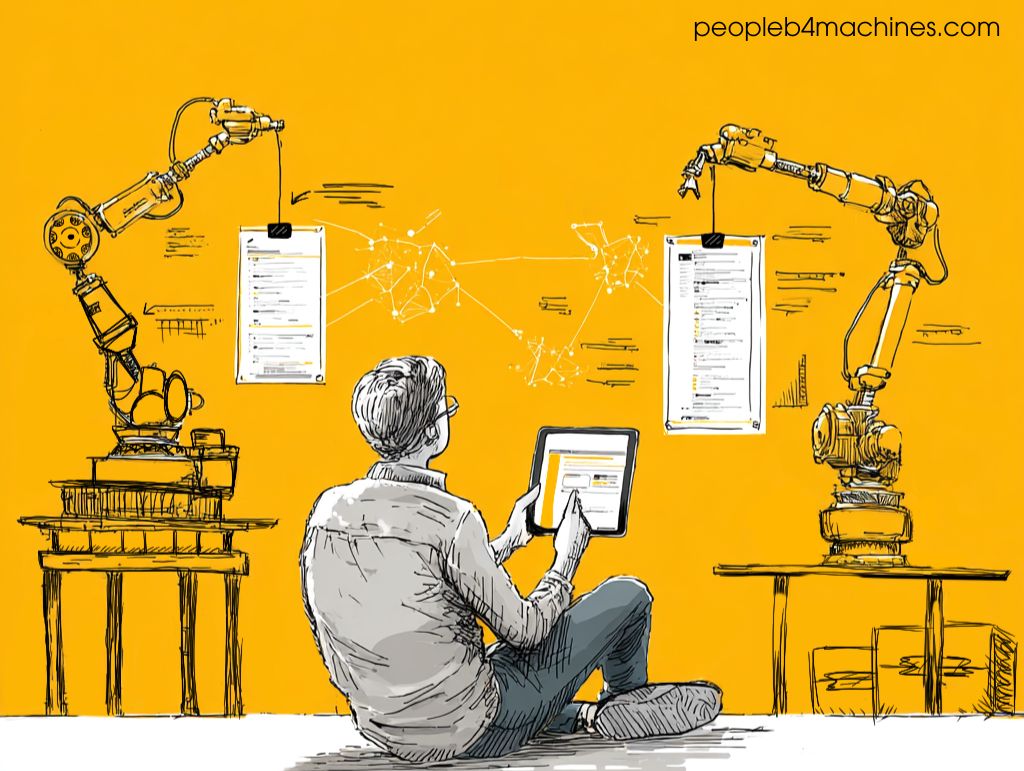
Utilizing AI tools helps automation grow, change, and adapt.
The humanoid advantage
When we think about the future of robotics, we often picture humanoid machines and there are practical reasons why that vision may become reality.
Much of today’s production infrastructure, such as tools, workstations, and processes, are designed for human hands, height, and movement. A robot shaped similarly to a person could operate in those environments without major redesign.
“The human form is a pretty good general-purpose platform already. We’re pretty adaptable and capable,” Dorr shared. Can we end up with a sentence about why this is an advantage to manufacturers?
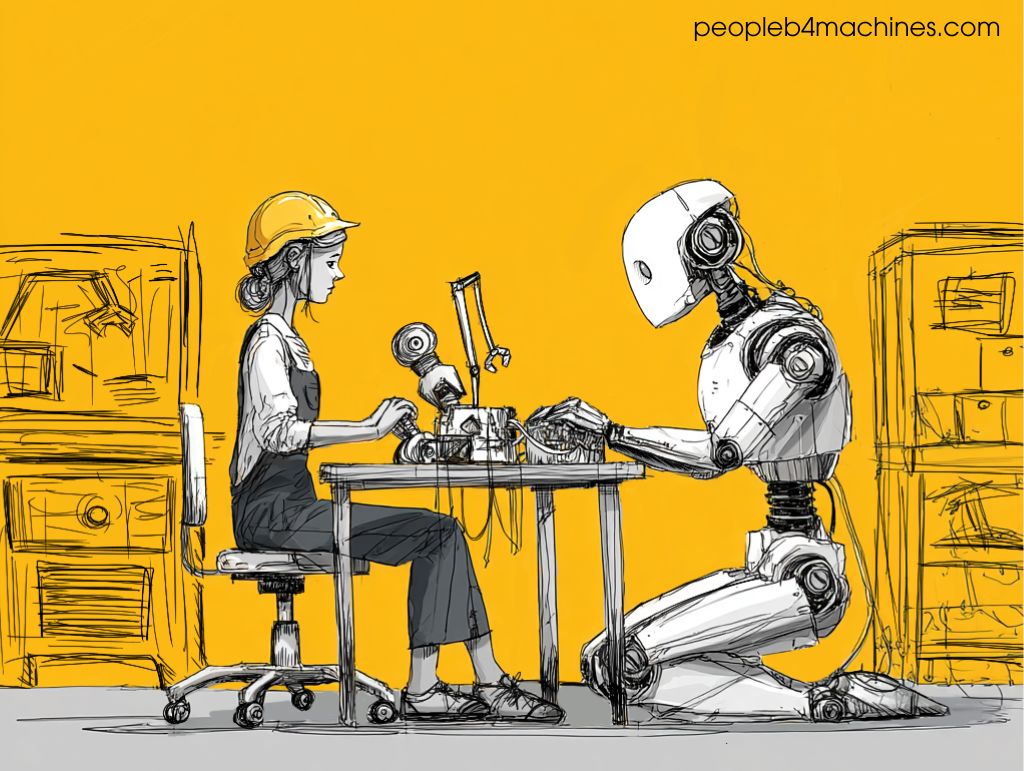
Humanoid AI could be the most useful tool for automation’s future.
Navigating new territory
Like waiting for the next best technology, businesses face a dilemma: buy now or wait for better, cheaper models? Some industries will embrace wholesale transformation. Others will integrate robots gradually alongside human workers.
For manufacturers making large capital investments, the decision often comes down to timing. Technology is improving quickly, but waiting too long can leave companies behind their competitors. That’s why Dorr encourages companies to focus on experimentation rather than perfection.
“Find an opportunity. Begin testing and utilizing these technologies early and figuring out how your company is going to respond.”
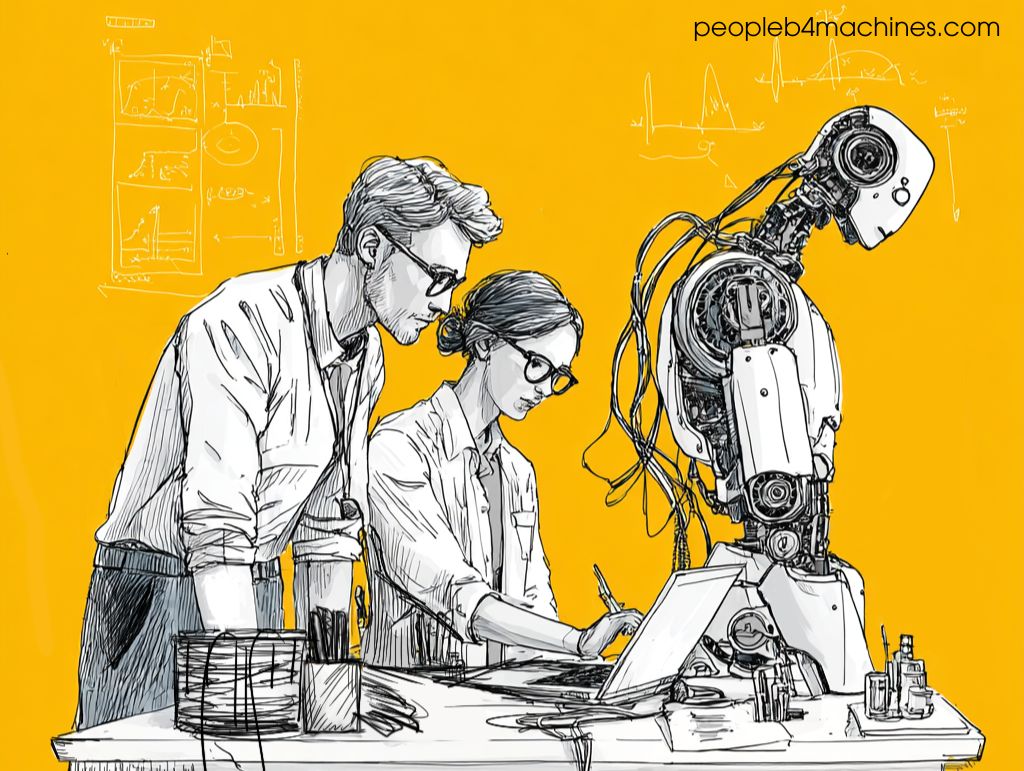
Companies investing in AI should focus on experimentation rather than perfection.
Why intelligence matters
The hard truth is that nobody has all the answers. We’ve never experienced this kind of shift before. Success requires experimentation, high failure tolerance, and rapid learning. Most importantly, we must protect people, not companies, as this transformation unfolds.
While the concept often sounds like science fiction, Dorr believes that “intelligence is the solution to every problem.” Throughout human history, new knowledge and innovation have helped societies solve challenges and improve living standards. If artificial intelligence continues to advance responsibly, it could accelerate humanity’s ability to address some of its most complex problems.
Rather than fearing intelligence, the goal should be learning how to harness it.
Explore the possibilities
Thinking about how AI will impact your factory? The right approach starts with experimentation, adaptability, and the right partners. Explore how Eclipse Automation helps manufacturers prepare for the future of automation.
Related articles and insights
-

Programming the future with Vanessa Loiola: Why robots give us time back
Programming robots means programming a better use of human time. Read More
-

Is the real factory bottleneck human or digital? | People B4 Machines podcast
Automation often highlights machines—but maybe the real bottleneck isn’t digital. Read More
