



The conversation around automation often focuses on machines taking over, but what if the real factory bottleneck isn’t human or digital?
That question drives this episode of People B4 Machines, a podcast powered by Eclipse Automation that explores how people and technology shape the future of factory work.
In this episode, Mike Nager, Solutions Center Director from Festo Didactic and longtime Industry 4.0 advocate, joins host Amanda Cupido to unpack why the biggest challenges in modern manufacturing aren’t about choosing sides, but building alignment.
Key Takeaways
- Why the “human vs. digital” debate misses the point
- How workforce readiness and integration shape Industry 4.0 success
- Why “durable skills” are the new technical advantage
- How manufacturers can bridge perception gaps and talent shortages
- A link to listen to the full episode with Mike Nager
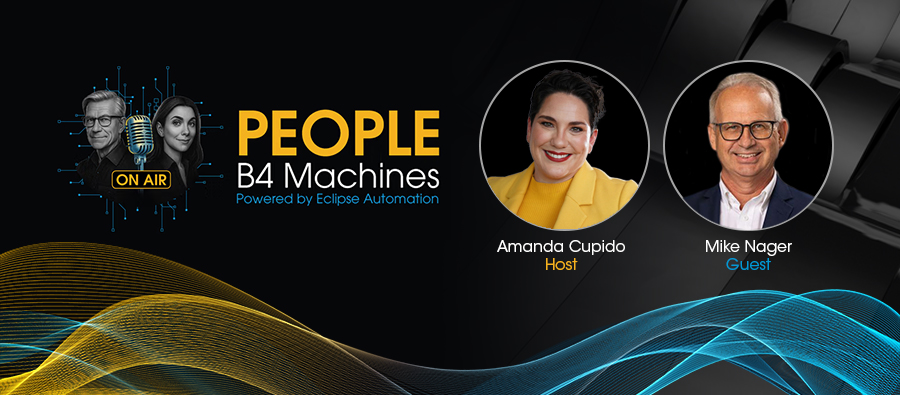
Listen to the full conversation
Hear Mike Nager’s full episode, Is the real factory bottleneck human or digital?, and explore more conversations on the human side of factory automation at peopleb4machines.com.
The human vs. machine debate
Factory bottleneck discussions often focus on who’s to blame—people or systems—but Nager believes that mindset misses the point. After visiting more than 500 manufacturing facilities, he’s seen the real issue firsthand.
“It’s not an either-or situation,” he explained. When people and technology don’t connect, efficiency breaks down.
The challenge, he noted, is that technology is evolving faster than most organizations can train. AI, machine learning, and connected systems now change at a pace many teams struggle to keep up with. Workers aren’t falling behind because they lack ability—they’re working in environments where skill requirements shift faster than traditional training cycles allow.
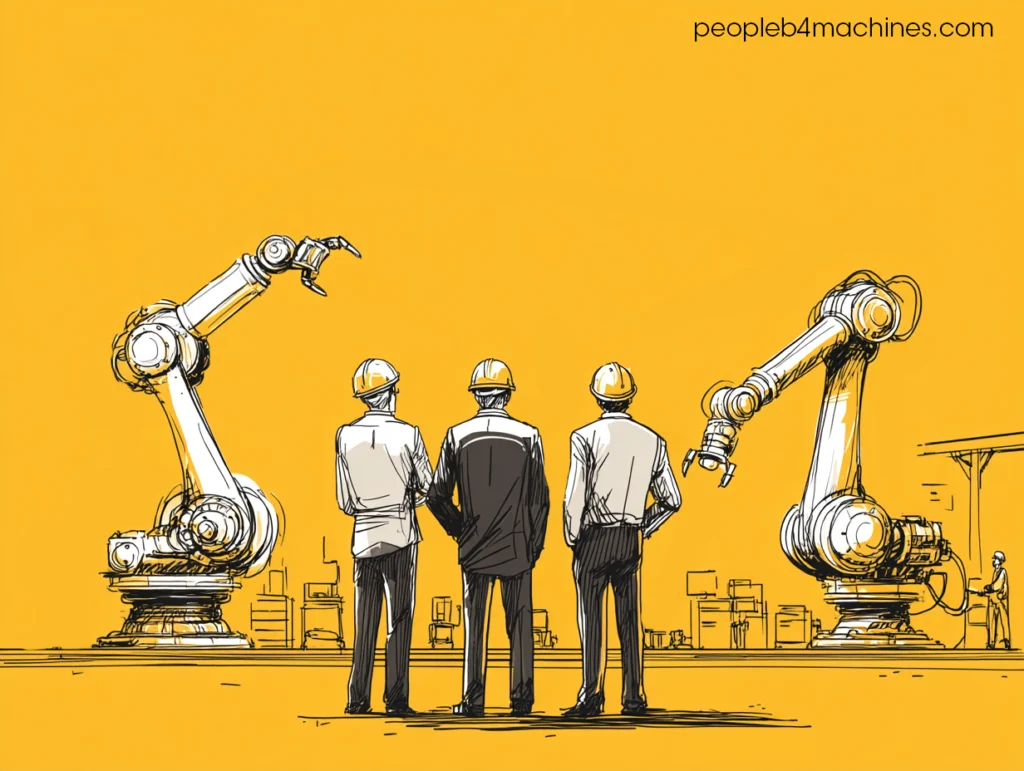
AI and machine learning outpaces traditional training cycles, creating skill gaps across every level of manufacturing.
Building agility through people
Nager believes factories thrive when technology amplifies human capability. Automation reshapes work. It doesn’t replace the need for people.
“Repetitive tasks are probably going to be automated,” he said. The rest of the work relies on skilled teams who adapt, solve problems, and understand context.
As lower-value tasks shift to machines, workers need strengths in critical thinking, teamwork, and communication. Nager calls these “durable skills,” or the abilities that machines can’t replicate.
“Teams are going to be thinking more about the why questions than the how questions,” he said.
Organizations that invest in these skills build agile workforces capable of keeping pace with new technologies. Instead of hiring for static roles, they develop teams that evolve alongside automation.
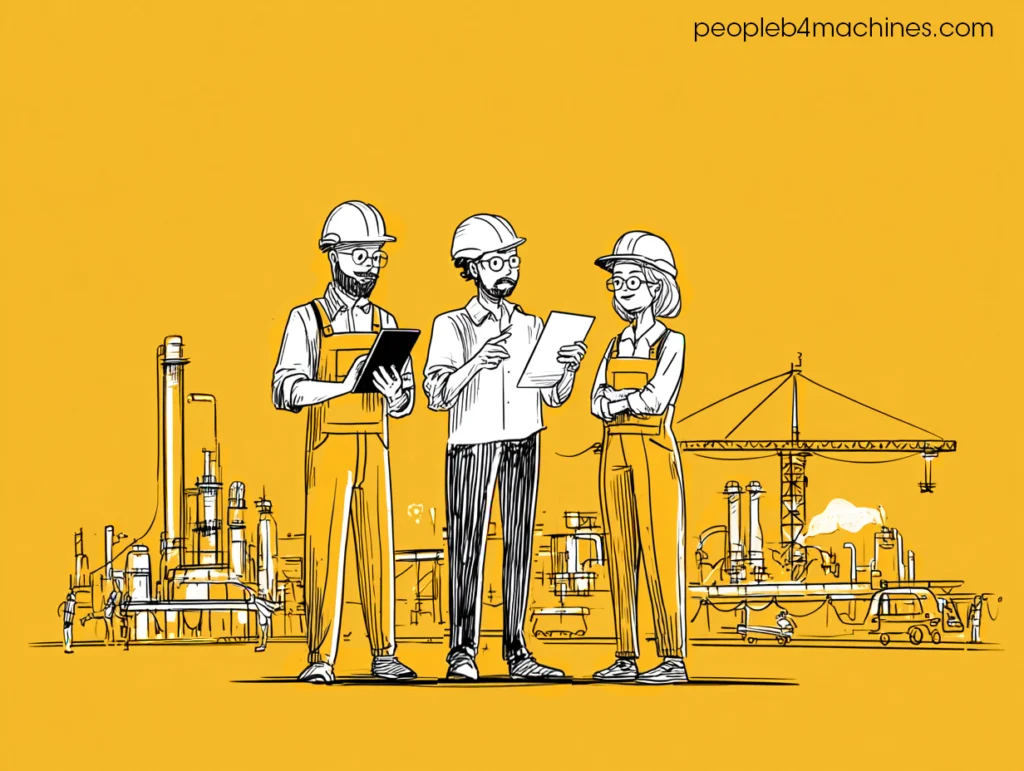
Prioritize durable skills like critical thinking, teamwork, and adaptability when building your future workforce.
Rethinking factory perception
Many people still imagine manufacturing as dark, outdated, or fully automated. Nager sees something different. In fact, most facilities look nothing like that image.
“They might think there’s no people walking around and everything is automated, with robots on the floor and on the ceiling feeding machines that do everything themselves. For most places, that’s not the case,” he said.
Instead, factories blend hands-on work with digital skills—programming robots, managing data, and solving system issues on the fly.
That disconnect between perception and reality continues to fuel a talent shortage. Roles evolve quickly, yet many young professionals never consider manufacturing because they assume it’s low-tech.
Closing that perception gap is essential for attracting new talent.

Misconceptions about “dark, fully automated factories” make it harder for companies to attract talent.
Merging human with machine
For Nager, the path forward requires moving from human versus machine to human with machine.
“I don’t place blame on the humans or the technology,” he said. “It’s how you integrate both.”
That mindset defines the next phase of Industry 4.0. Success depends on flexible teams, shared understanding, and a willingness to learn as fast as technology evolves.
The factories that thrive will be the ones where human curiosity and digital capability grow together.
Explore the possibilities
How can you help people and technology work better together? Learn how Eclipse Automation helps manufacturers connect people and digital systems to improve productivity and adaptability across every operation.
Related articles and insights
-

People B4 Machines podcast: Why is it taking so long to connect the top floor to shop floor?
Leadership-factory disconnect hinders effective automation and operational success.
-

Introducing People B4 Machines: Conversations on the chaos of factory automation
The People B4 Machines podcast demystifies automation, aligning strategy, tech, and culture.
