

EV and battery factory automation
Power the future with smarter, safer, automated EV and battery production with faster, safer, smarter production for clean energy vehicles
Overview
Re-thinking EV and battery factory automation
EV and battery manufacturing demands precision, safety, and efficiency at every stage. Factories face challenges in automating complex assembly, maintaining consistent quality, minimizing downtime, and scaling operations to meet growing clean energy demand. Advanced factory automation streamlines workflows, optimizes performance, and enables manufacturers to produce smarter, faster, and more reliably.

Watch the video
Drive the Future with Automated EV and Battery Manufacturing. Watch the video. Get Inspired.
We solve
Industry challenges
- Complex and precision-dependent assembly
EV and battery components require highly precise assembly. Manual processes can introduce errors, slow production, and limit scalability. - Quality control and consistency
Maintaining tight tolerances and defect-free batteries is critical for safety and performance. - Safety and regulatory compliance
Handling high-voltage batteries and sensitive chemicals presents significant risks. - Scaling production to meet growing demand
EV adoption is rapidly increasing, requiring flexible, high-volume manufacturing. - Data digitization, AI & generative AI integration
Fragmented legacy systems limit insights into production efficiency and predictive maintenance. - Energy efficiency and resource optimization
Battery production is energy- and resource-intensive. - Access to critical minerals
Limited availability of lithium, cobalt, nickel, and other key materials can constrain production.

Our expertise
Our solutions in EV and battery factory automation
We specialize in designing and integrating automation systems for every major component of electric vehicle manufacturing. From battery cells and e-drives to electronic components and laser welding, our solutions support high-speed production, quality control, and operational agility.
With experience in electric vehicle manufacturing automation and data system integration, Eclipse is positioned to help clients lead in the next generation of mobility.

Electric vehicle components
Automate the production of battery cells, modules, and packs, along with motor winding, power electronics, and e-drive assemblies.
Hydrogen fuel cell assembly
Support hydrogen system integration with deep experience in fuel cell stacking and MEA/PEM assembly.
Powertrain component assembly
Deliver automated solutions for e-drive, traction motors, and other high-performance EV drivetrain systems.
Electronic component assembly
Provide assembly automation for inverters, DC/DC converters, charge controllers, and bus bars.
Laser welding, potting, and fastening
Offer specialized expertise in high precision joining, encapsulation, and mechanical fastening processes critical to EV system integrity.
FAQs
Frequently asked questions
Why is automation important for electric vehicle manufacturing?
EV manufacturing requires precise assembly of sensitive components like battery cells, e-drives, and power electronics. Automation improves consistency, reduces human error, increases throughput, and supports the scalability needed to meet growing demand for electric mobility. It also helps manufacturers maintain quality standards and ensure regulatory compliance.
How does Eclipse Automation support electric vehicle battery production?
Eclipse provides advanced automation for battery cells, modules, and pack assembly, ensuring high precision, scalability, and traceability. Our systems help manufacturers maintain quality consistency at high throughput, integrate power electronics, and optimize e-drive production, enabling faster EV manufacturing and reduced time-to-market.
What are the main challenges in EV and battery manufacturing?
Key challenges include scaling production while maintaining quality, integrating complex e-drive and power electronics systems, managing traceability, and handling sensitive components safely. Automation systems are essential to overcome these challenges, improve efficiency, and accelerate time-to-market for EV products.
What EV components can Eclipse Automation automate beyond batteries?
Eclipse designs and integrates automation for motor winding, e-drives, inverters, DC/DC converters, charge controllers, and bus bars. We also provide laser welding, potting, and high precision fastening solutions, ensuring robust assembly and operational reliability across the full spectrum of electric vehicle components.
Featured articles and insights
-

Automation benefits and the impact of retention, from Jake Hall’s perspective
Better automation leads to better jobs and stronger workforce retention.
-

Programming the future with Vanessa Loiola: Why robots give us time back
Programming robots means programming a better use of human time.
-
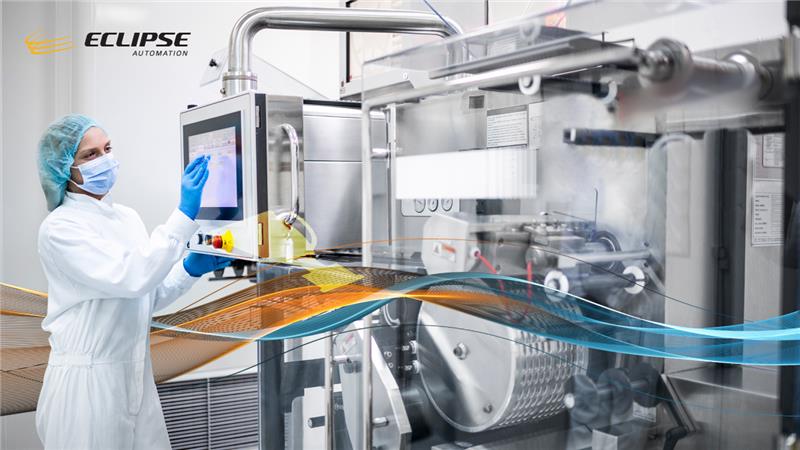
Life sciences manufacturing: Smarter, flexible automation for modern facilities
Life sciences automation enables flexible, compliant manufacturing for rapidly evolving medical technologies.
