

Digitize your factory—from machine to enterprise
Empowering factories to act on every insight, every step of the way.
Watch the videoOverview
Turn factory data into decisions that drive throughput, quality, and uptime
Eclipse Automation helps manufacturers capture, contextualize, and operationalize factory data to improve performance today and scale intelligently tomorrow. From sensors and PLCs to MES, analytics, and AI—built for real factories, not dashboards. Whether you’re modernizing a single line or scaling digitization across global plants, we deliver practical, production proven data digitization that drives measurable results.
Why data digitization matters on the factory floor
Modern factories generate massive volumes of data but most of it remains trapped, fragmented, or underutilized.
Engineering and operations teams are under pressure to:
- Increase throughput without adding headcount
- Improve quality and traceability
- Reduce downtime and scrap
- Justify automation, AI, and capital investments with real ROI
True data digitization isn’t about more reports it’s about connecting machines, processes, and people with trusted, real-time data that drives action. We bridge the gap between OT reality and IT ambition, delivering digitization solutions grounded in manufacturing execution not theory.
We solve
Industry challenges
- Disconnected systems
Machines, PLCs, vision systems, robots, and test equipment operate in silos making root-cause analysis slow and incomplete. - Poor data quality and context
Raw signals without process context lead to misleading dashboards and low trust from operators and engineers. - Manual data collection
Spreadsheets, paper logs, and tribal knowledge limit scalability and introduce risk. - Legacy infrastructure
Brownfield environments make integration complex, costly, and risky without the right automation expertise. - Difficulty scaling AI and analytics
Without structured, reliable data pipelines, advanced analytics, and AI, initiatives stall before delivering value.
Data infrastructure is essential to making informed decisions for automation and can be a significant obstacle for many. I can’t imagine how you’d even figure out where the appropriate investments are without proper data collection in place. Bridging IT and operational technology requires shared terminology and clarity of roles. He emphasizes using standards such as ISA-95 and assigning clear lines of accountability by means of Responsibility Assignment Matrices.”
Scott Reynolds,
Senior Security and Network Engineering Manager at Johns Manville and President of the International Society of Automation
Eclipse Automation capabilities
Eclipse Automation delivers production-proven digitization that work on the floor and drives real operational and financial impact.
Factory data architecture and integration
We design and deploy end-to-end systems that connect:
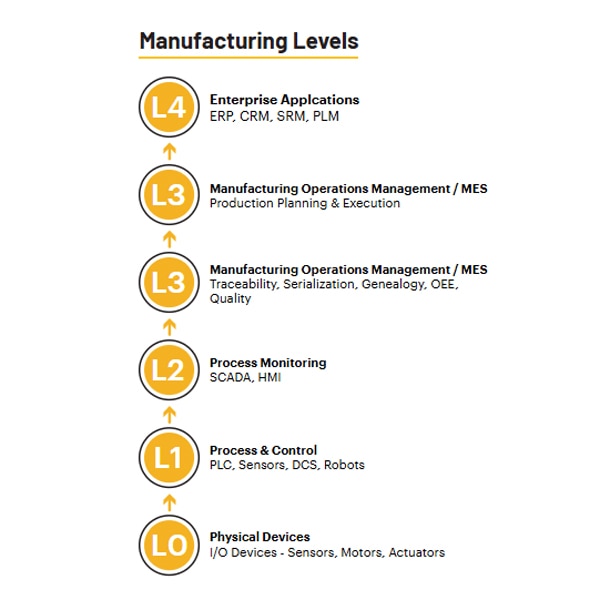
- Machines, sensors, PLCs, robots, and vision systems
- MES, SCADA, historians, quality systems, and enterprise platforms
- Edge computing to cloud and on-prem analytics
Built for brownfield and greenfield environments.
OT-to-IT
digitization
expertise
Unlike software-only providers, Eclipse understands:
- Control systems and machine behavior
- Cycle time, yield, uptime, and quality drivers
- How data is generated—and used—on the factory floor
We ensure data is contextualized, and actionable.
Real-time performance
visibility
Digitize critical key performance indicators Is such as:
- OEE, downtime, and bottlenecks
- First-pass yield and scrap drivers
- Cycle time variation and throughput loss
- Equipment health and predictive maintenance indicators
Delivered in operator-friendly and engineer-ready views.
Traceability, compliance and quality data
Enable digital traceability for regulated industries with:
- Lot, unit, and process-level data capture
- Vision and test data integration
- Audit-ready records for quality and regulatory compliance
Designed to deliver confidence to compliance.
Analytics, AI and continuous improvement
We don’t just capture data—we prepare it for:
- Root cause analysis
- Statistical process control
- Machine learning and AI models
- Continuous improvement and digital transformation roadmaps
We bring industry 4.0 to life by delivering actionable insight.
See the digital factory in action
Executives
| Turn factory data Into measurable business performance |
| Eclipse Automation helps manufacturers digitize factory data to increase throughput, improve quality, reduce risk, and accelerate ROI from automation and AI investments. |
| Executive challenges • Limited visibility into true operational performance • Data exists, but it is fragmented across systems, sites, and suppliers. • High cost of downtime, scrap, and quality escapes • Lack of real-time insight delays decisions and corrective action. • Difficulty scaling digital & AI initiatives • Inconsistent data foundations stall enterprise rollouts. • Risk in regulated and high-precision industries • Traceability, compliance, and audit readiness remain manual and error-prone |
| Our capabilities Enterprise-ready factory digitization: • Standardized OT-to-IT data architectures • Secure, scalable integration across global operations • Designed for brownfield and greenfield environments Performance and ROI focused outcomes AI and analytics enablement |
| Make data a competitive advantage—not an IT experiment |
Engineering and operations
| Get the right data—from the machines you run—In real time |
| Eclipse Automation helps engineering and operations teams capture, contextualize, and use factory data to improve uptime, yield, quality, and cycle time. No spreadsheets. No guesswork. Just actionable data. |
| Operations overview • Spread across machines and systems • Missing process context • Manual data collection • Paper logs and spreadsheets slow response and hide problems. • Poor root-cause visibility • Downtime and quality issues take too long to diagnose. • Inconsistent data across equipment • Different machines, vendors, and vintages don’t talk to each other. |
| Our capabilities Machine and line-level data capture • PLCs, sensors, robots, vision, test systems • Brownfield-friendly integration • Edge and real-time data processing Contextualized factory data Real-time visibility that operators use |
| Stop chasing data. Start improving performance. |
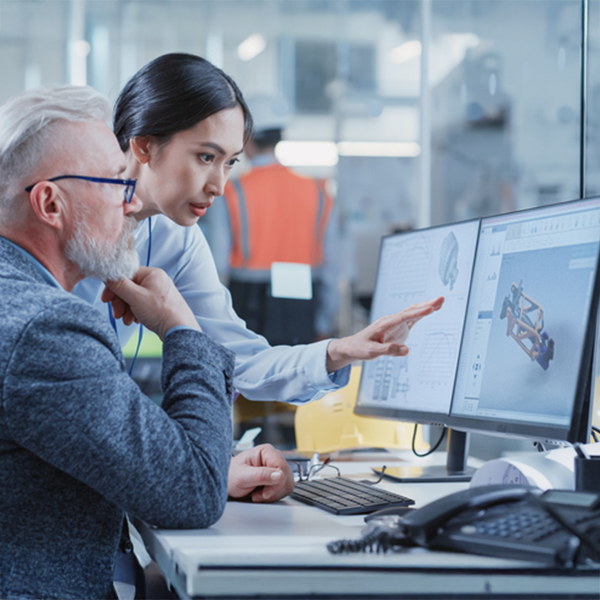
Eclipse Automation enables leaders to:
- Align OT data with enterprise and digital transformation strategy
- Improve operational performance across plants
- De-risk AI, analytics, and smart factory initiatives
- Deliver faster payback on capital investments
We connect machines, vision systems, robots, testers, and PLCs into a single, trusted data foundation that supports daily operations and continuous improvement. CTA Built by people who understand how factories run.
The Automation Lifecycle
Explore the Eclipse Automation lifecycle
One partner. One process.
Eclipse brings your automation project to life—from strategy to launch and beyond. It all starts with smart planning: mapping your processes, validating ideas, and identifying the right solution.
This foundation fuels a proven end-to-end lifecycle that spans advanced engineer services (AES), pre-automation system development, vertical integration, and post-launch optimization. By aligning goals early and managing everything under one roof, you gain a faster, more confident path forward with reduced risk.
FAQs
Frequently asked questions
Why do factory digitization projects break down after the pilot phase?
Most pilots work in isolation but fail to scale. The breakdown usually happens when solutions aren’t designed to fit real production constraints—shift changes, maintenance windows, variability in materials, or legacy controls. Without standard architectures, data models, and clear ownership between engineering and operations, pilots stay pilots.
Why do factory digitization initiatives struggle to deliver ROI?
Most initiatives don’t fail on technology alone. They struggle because digitization is treated as a tool deployment instead of an operating-model transformation. Without clear business outcomes, scalable architecture, cross-functional ownership, and change management, technology investments remain pilots rather than value engines.
What role should AI play in factory digitization today?
AI should augment decision-making, not replace it. The highest-value use cases focus on quality, maintenance, planning, and operator support. AI only creates value when paired with trusted data, governance, and human-in-the-loop processes otherwise it amplifies existing inefficiencies.
How do we prepare our workforce for a digital factory?
Winning organizations invest in capability, not just hiring. They build internal learning ecosystems, reskill operators into digital roles, and create clear career paths across engineering, operations, and IT. Digitization fails without people who can design, run, and improve it every day.
How do we modernize legacy equipment without disrupting production?
Digitization doesn’t require ripping and replacing. Successful organizations layer modern connectivity, edge computing, and data models onto existing assets prioritizing critical lines first. The key is modular architecture, clear integration standards, and close coordination between engineering, operations, and IT to protect uptime while enabling insight.
What data should we prioritize collecting on the factory floor?
More data isn’t better—relevant data is. Focus first on signals that impact throughput, quality, energy use, and maintenance. Start with a small, trusted data set that operators and engineers agree on, then expand. If the data isn’t actionable on the floor, it doesn’t belong in the system.
Who should own factory digitization—IT, OT, or the business?
Ownership must be shared. The business defines value and priorities, engineering designs how factory automation works, operations ensure adoption and stability, and IT provides the secure, scalable digital backbone. Digitization succeeds when these groups operate as one system, not in silos.
Featured articles and insights
-

Automation benefits and the impact of retention, from Jake Hall’s perspective
Better automation leads to better jobs and stronger workforce retention.
-
Life sciences manufacturing: Smarter, flexible automation for modern facilities
Life sciences automation enables flexible, compliant manufacturing for rapidly evolving medical technologies.
-

Industrial Automation Overview
Automation for durability, precision, and throughput across industrial manufacturing.
