

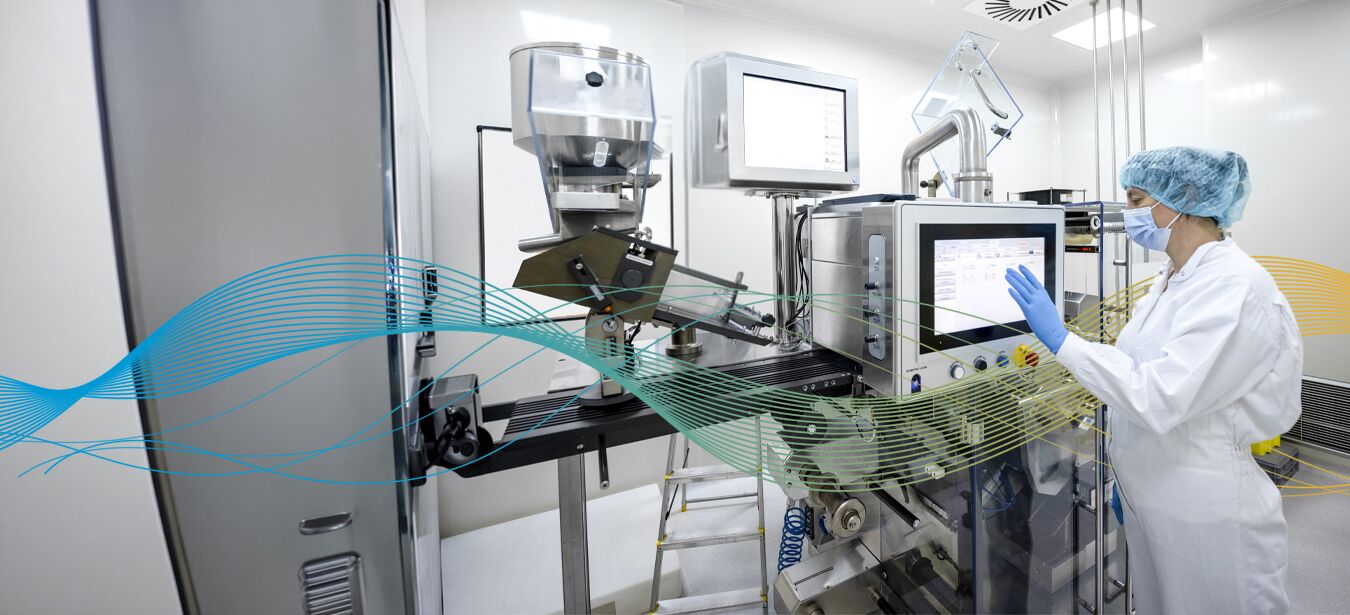


A cleanroom-ready partner for medical automation integration designs, builds, and validates equipment that protects sterility from first concept to final qualification run. That means systems engineered for ISO-classified environments, documentation that supports your validation package, and controls architecture that connects cleanly to your MES and SCADA layers. For life sciences manufacturing leaders, the right partner shortens the path from design freeze to validated production and removes the human interventions that create contamination risk. Eclipse Automation brings that capability across the full factory automation lifecycle, from advanced engineering and digital twins to build, validation, and post-automation support.
Why are life sciences manufacturers rethinking cleanroom automation now?
Regulators and technology are pushing in the same direction. The revised EU GMP Annex 1, in force since August 2023, recommends restricted access barrier systems (RABS), isolators, and robotic systems to reduce human intervention in critical zones. At the same time, Deloitte’s Tech Trends 2026 life sciences perspective finds Physical AI is most advanced in sterile biopharma manufacturing, with medtech roughly 12 months behind and both sectors expecting smart robot adoption on the factory floor to rise over the next two to four years.
The hardware base is ready for that shift. The International Federation of Robotics reports a record 5 million industrial robots now operating in factories worldwide, and U.S. installations grew 12% in 2025 to almost 38,500 units.
Key takeaways
- Cleanroom-ready medical automation integration combines sterile-compatible equipment design, GMP-ready documentation, and clean MES and SCADA connectivity.
- EU GMP Annex 1 encourages barrier systems and robotics to cut human intervention, which makes automation a compliance strategy as well as a productivity one.
- Digital twins and virtual commissioning catch design and PLC logic issues before stainless steel is cut, which protects validation timelines.
- Connected data foundations turn Machine Vision, Industrial IoT, and Predictive Maintenance into measurable gains in yield, deviations, and uptime.
- One partner across the full factory automation lifecycle reduces handoffs between design, build, validation, and support.
What should a cleanroom-ready integrator bring to the table?
Life sciences programs succeed when the integrator treats the cleanroom as a design input from day one. Three capabilities separate a cleanroom-ready partner from a general automation integrator.
How does cleanroom design change the equipment?
Every component inside the classified space has to earn its place. That means cleanroom-rated Industrial Robotics, enclosed cable routing, cleanable surfaces, and materials that tolerate repeated sanitization cycles. Layouts keep motion and particle sources out of first air and limit the glove-port and door interventions that Annex 1 asks manufacturers to justify.
How do digital twins reduce validation risk?
Digital Twins let engineering, quality, and operations teams test cycle times, reach studies, intervention paths, and PLC logic before fabrication begins. Virtual commissioning moves debugging off the critical path, so factory acceptance testing confirms performance instead of discovering problems. Eclipse RealitySync™ adds an immersive review layer, letting stakeholders walk the line and agree on access and maintenance zones early.
Why does data integration matter for compliance?
Regulated production depends on trustworthy records. Manufacturing systems integration links equipment to MES, SCADA, and electronic batch records so every unit, parameter, and alarm is traceable. That foundation matters because Deloitte’s 2026 Life Sciences Outlook found only 22% of life sciences leaders have scaled AI, and just 9% report significant returns. Industrial AI performs only as well as the Operational Technology data feeding it.
What results can medical device automation deliver?
The upside is measurable. McKinsey reports that digital and analytics use cases in biopharma manufacturing have delivered a 30 to 50% reduction in deviations and a 25 to 40% increase in plant capacity. In medical device automation, Vision Systems verify every part at line speed, while Predictive Maintenance protects uptime once the line is qualified.
Eclipse life sciences programs have delivered a 20% yield improvement through consistent, traceable automation built for compliant production.
How does Eclipse Automation support cleanroom medical automation integration?
Eclipse Automation manages the full factory automation lifecycle under one roof. Advanced engineering services define the right concept and ROI case. Vertical integration connects design, fabrication, and assembly across one million square feet of manufacturing space. Post-automation support keeps validated systems performing long after launch.
With 400 engineers across 12 locations worldwide, Eclipse supports pharmaceutical automation and medical device programs for global manufacturers and OEMs. Its digital manufacturing and AI portfolio, including the Aurora Platform™ Series and Eclipse RealitySync™, gives teams modular building blocks and shared visibility from first concept to validated output.
FAQs
Frequently asked questions
What is medical automation integration?
Medical automation integration is the design, build, and validation of automated equipment for medical device and pharmaceutical production, connected to plant systems such as PLC, MES, and SCADA. Learn more about Eclipse’s life sciences automation work.
How does EU GMP Annex 1 affect automation projects?
Annex 1 encourages barrier technologies and robotics that reduce human intervention in critical zones. Automation concepts should account for contamination control from the first layout. Eclipse advanced engineering services build those requirements into early concept and simulation work.
Can digital twins help with equipment validation?
Yes. Digital twins test layouts, cycle times, and control logic virtually, which shortens commissioning and reduces surprises at factory acceptance testing. Explore Eclipse’s digital twin experience and Eclipse RealitySync™.
What role does machine vision play in medical device automation?
Machine Vision inspects and verifies parts at line speed, supporting 100% inspection, traceability, and defect prevention without adding manual touchpoints inside the cleanroom. See Eclipse’s vision experience.
What support is available after a cleanroom system goes live?
Ongoing support covers performance monitoring, Predictive Maintenance, spare parts, and continuous improvement to protect uptime and validated status. Review Eclipse service and support packages.
Explore the possibilities
Planning a cleanroom automation project for medical devices or pharmaceuticals? Book a discovery call to learn how Eclipse Automation supports cleanroom medical automation integration, from concept and validation to long-term production support.
Related articles and insights
-

What are turnkey automation systems for regulated manufacturing?
Turnkey automation systems give regulated manufacturers one accountable partner for design, build, integration, commissioning, and ramp-up.… Read More
-
Medical automation compliance guide for 2026
FDA’s QMSR took effect in February 2026, and risk-based software assurance changed how manufacturers validate production… Read More
