

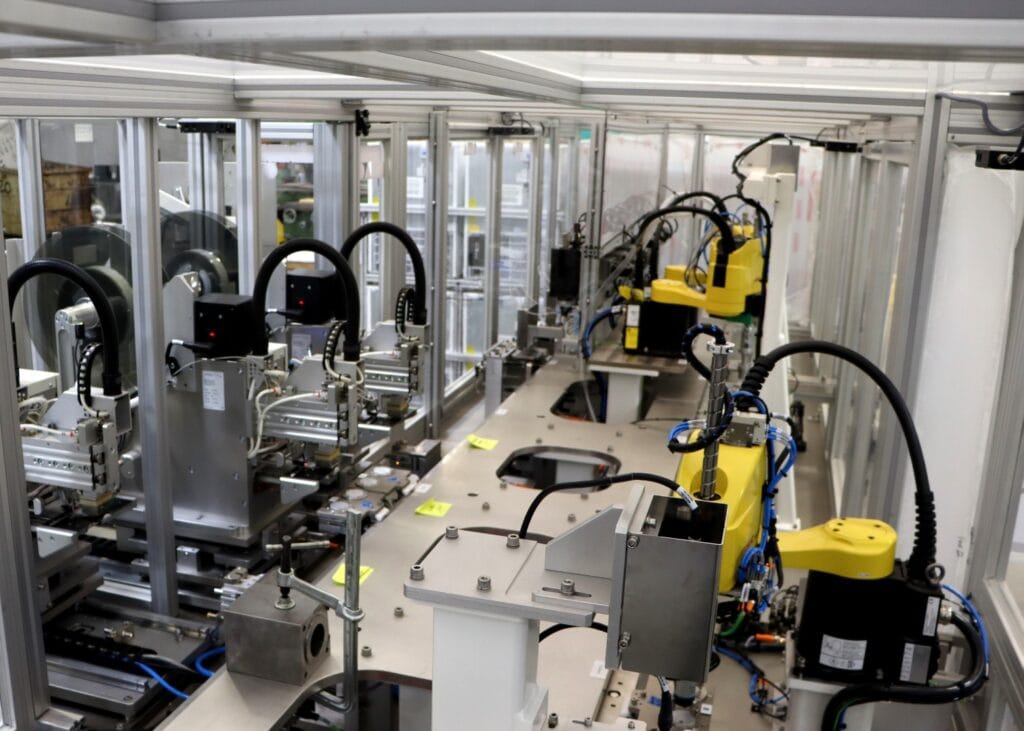


Growing a manufacturing business requires more than increasing production capacity. As demand changes, supply chains evolve, and skilled labor becomes harder to find, manufacturers need scalable processes that improve productivity without sacrificing quality or profitability.
The most successful manufacturers combine factory automation, Industrial AI, digital technologies, and workforce development to build operations that can adapt quickly while supporting long-term growth.
Whether you’re expanding production, introducing new product lines, or preparing for global markets, these proven scale manufacturing strategies can help you grow with confidence.
Key Takeaways
- Build scalable manufacturing processes using automation, Industrial AI, and real-time production data.
- Improve productivity by connecting people, equipment, and systems through Industrial IoT, MES, and SCADA platforms.
- Increase operational resilience with predictive maintenance, digital twins, and flexible production lines.
- Invest in workforce development alongside technology to maximize long-term performance.
- Support sustainable growth with strategic planning, quality management, and continuous improvement.
What does it take to scale manufacturing operations successfully?
What does it take to scale manufacturing operations successfully?
Scaling manufacturing means creating systems that allow production, quality, and profitability to grow together. Rather than simply adding more equipment or labor, manufacturers need connected technologies, standardized processes, and reliable data that support faster, smarter decision-making.
According to the McKinsey Global Institute, manufacturers that successfully adopt advanced digital technologies consistently outperform peers through higher productivity, greater operational resilience, and faster innovation.
1. Invest in factory automation and Industrial AI
Factory automation is one of the most effective ways to improve productivity while maintaining consistent quality. Integrating industrial robotics, PLCs, machine vision, and AI Manufacturing applications can reduce manual tasks, increase throughput, and improve operational performance. A phased Factory Automation Lifecycle approach allows manufacturers to scale automation over time while maximizing the value of existing assets.
2. Connect production data with MES, SCADA, and Industrial IoT
Manufacturers generate valuable operational data every day, but disconnected systems can limit visibility. According to Deloitte’s Smart Factory research, connected manufacturing environments can improve productivity, increase capacity utilization, and reduce quality costs through greater operational visibility.
Integrating Manufacturing Execution Systems (MES), SCADA platforms, and Industrial IoT devices provide real-time insights into production, quality, equipment performance, and inventory. All of this helps organizations and teams monitor key performance indicators (KPIs), identify bottlenecks, and make informed operational decisions.
| Business objective | Technology |
| Improve production efficiency | MES + SCADA |
| Reduce downtime | Predictive Maintenance |
| Improve product quality | Machine Vision + AI inspection |
| Optimize scheduling | Industrial AI |
| Increase equipment utilization | Industrial IoT dashboards |
3. Use Digital Twins to reduce risk
Digital Twins create virtual models of equipment, production lines, or entire facilities, allowing manufacturers to test process changes before implementing them on the factory floor.
Simulating new layouts, production scenarios, or automation upgrades helps reduce commissioning time, minimize disruption, and improve project outcomes.
4. Implement predictive maintenance
Unexpected equipment failures can quickly impact production schedules and profitability. Predictive maintenance uses connected sensors, Industrial AI, and equipment data to identify potential issues before failures occur.
Scheduling maintenance based on equipment conditions improves uptime, extends asset life, and reduces costly unplanned downtime.
How can manufacturers build resilient operations?
Scalable manufacturing depends on more than technology. Flexible processes, skilled employees, and consistent quality help manufacturers respond to changing customer demands while maintaining operational performance.
Global manufacturers increasingly use standardized automation platforms to replicate successful production systems across multiple facilities, improving consistency and reducing implementation time.
Before expanding, manufacturers should evaluate:
- Production capacity
- Supply chain resilience
- Regulatory requirements
- Customer demand
- Automation readiness
5. Build flexible manufacturing operations
Demand can change rapidly, whether driven by customer preferences, supply chain disruptions, or new product introductions. Flexible production systems, modular automation, and programmable robotics allow manufacturers to adapt more efficiently while reducing the need for extensive reconfiguration.
6. Invest in workforce development
Automation changes the nature of manufacturing work, creating demand for employees with technical, analytical, and problem-solving skills. Providing ongoing training helps teams confidently adopt new technologies while supporting continuous improvement, operational efficiency, and workplace safety.
7. Prioritize quality and continuous improvement
Maintaining consistent quality becomes even more important as production grows. Automated inspection, machine vision systems, standardized processes, and continuous improvement initiatives help reduce defects, improve traceability, and strengthen customer confidence while supporting regulatory compliance where required.
What strategies support long-term manufacturing growth?
Long-term success requires balancing operational improvements with strategic planning. Manufacturers that plan for future market demands are better positioned to adapt and grow sustainably.
8. Diversify products and markets
Expanding into complementary products or new geographic markets can create additional revenue opportunities while reducing dependence on a single customer segment. Before expanding, evaluate production capacity, supply chain resilience, regulatory requirements, and customer demand to ensure growth is sustainable.
9. Improve sustainability through smarter operations
Sustainability and operational performance increasingly go together. Manufacturers are improving energy efficiency, reducing waste, and optimizing resource use through connected technologies, Industrial AI, and data-driven process improvements. These initiatives can lower operating costs while supporting environmental objectives and customer expectations.
For example, the World Economic Forum’s Global Lighthouse Network’s leading smart factories have demonstrated significant improvements in productivity, energy efficiency, and waste reduction through digital transformation initiatives.
10. Strengthen financial planning and risk management
Growth requires careful planning alongside operational investment. A long-term roadmap should include capital planning, cybersecurity, supply chain resilience, workforce development, and technology modernization. Building flexibility into financial and operational planning helps manufacturers navigate changing market conditions while supporting future expansion.
Turning strategy into sustainable growth
Scaling manufacturing operations requires a balanced approach that combines automation, connected data, skilled people, and strategic planning.
Technologies such as Industrial AI, Industrial IoT, Digital Twins, Machine Vision, predictive maintenance, MES, and SCADA are helping manufacturers improve productivity while building more resilient operations.
Manufacturers that invest in scalable systems today are better positioned to respond to changing customer demands, improve operational performance, and support sustainable long-term growth.
Article updated July 2026
FAQs
Frequently asked questions
What is the best way to scale manufacturing operations?
The most effective approach combines factory automation, standardized processes, workforce development, and connected technologies that improve visibility across production.
How does Industrial AI improve manufacturing?
Industrial AI analyzes operational data to optimize production, identify quality issues, predict equipment failures, and support faster decision-making across manufacturing operations.
What is the role of Digital Twins in manufacturing?
Industrial AI analyzes operational data to optimize production, identify quality issues, predict equipment failures, and support faster decision-making across manufacturing operations.
Why are MES and SCADA important?
MES and SCADA systems provide real-time visibility into production, equipment, and quality performance, helping manufacturers improve efficiency, traceability, and operational decision-making.
How can factory automation support long-term business growth?
Factory automation improves productivity, consistency, scalability, and operational resilience while reducing manual processes and supporting future expansion.
Explore the possibilities
Book a discovery call to learn how Eclipse Automation supports scalable factory automation solutions that improve productivity, operational efficiency, and long-term manufacturing growth.
Related articles and insights
-

How emerging industries are creating new use cases for automation
Factory automation is finding new applications as industries scale, evolve, and adopt new technologies. From data… Read More
-
How to prevent automated assembly line commissioning delays
Automated assembly line commissioning delays start long before equipment reaches the plant floor. This step-by-step guide… Read More
