

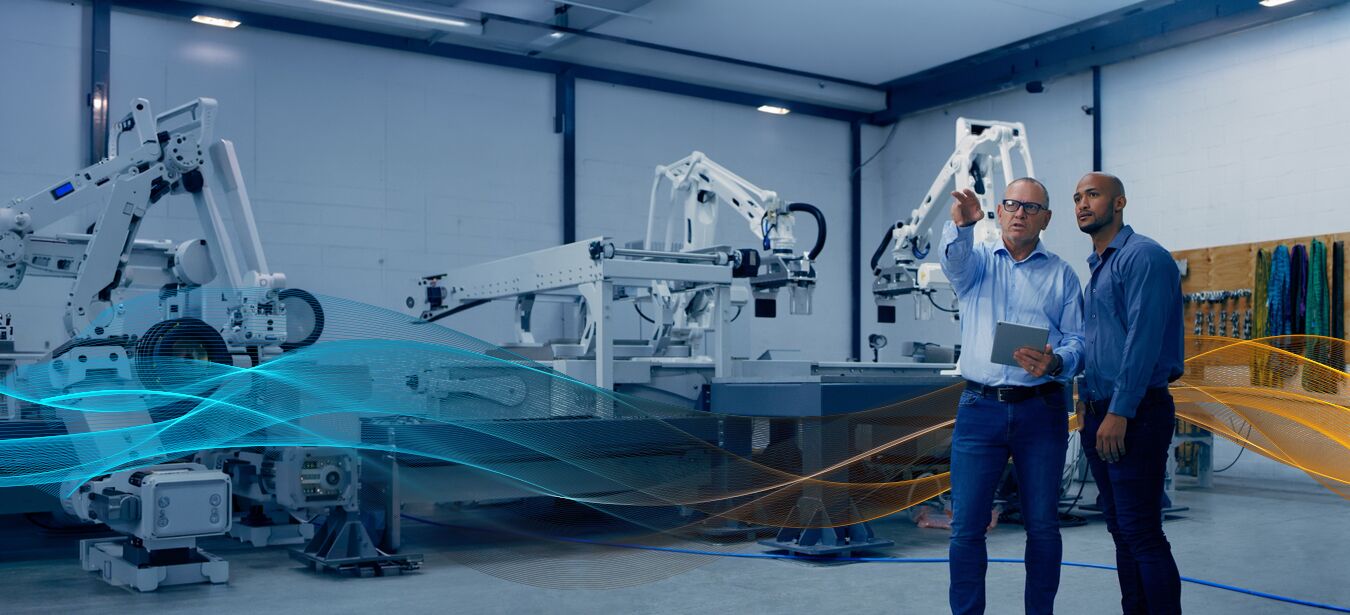


To shortlist factory automation solutions and partners by plant type, start with your operating environment, then test every candidate against the proof that environment demands. Complex assembly plants need integrators with deep process engineering and machine vision experience. Automotive production needs proven line-rate throughput and strict PLC and MES standards. Regulated life sciences sites need validation documentation built into every phase. Safety-critical operations need risk-rated design and remote handling depth. Multi-plant networks need a partner that can replicate one design across sites and support it for years. A shortlist of three to five partners built on these filters cuts RFQ effort and lowers the risk of hiring a capable vendor for the wrong factory.
Why does plant type matter more than vendor size?
Budgets are moving toward automation, so the pool of options keeps growing. Deloitte reports that 80% of manufacturers plan to put at least 20% of their improvement budgets into smart manufacturing, and the IFR counts 4.66 million industrial robots in operation worldwide, up 9% in a year.
More choice does not make selection easier. In the same Deloitte research, 65% of executives ranked operational risk as a top-two concern, including disruption from failed initiatives. Your plant type decides which risks matter most, so it should decide which partners make the list.
Key takeaways
- Plant type sets the proof points. Filter partners by your operating environment before comparing price or size.
- Complex assembly and automotive plants need throughput evidence, machine vision depth, and PLC and MES standards discipline.
- Regulated and safety-critical sites need validation documentation and functional safety expertise from the first design review.
- Multi-plant networks need design replication, OT and IT integration, and regional post-launch support.
- Keep the shortlist to three to five partners and score each on full factory automation lifecycle coverage.
What should each plant type look for in a factory automation partner?
Use the environment filters below to screen factory automation integrators before the first RFQ goes out.
Which partners fit complex assembly plants?
High-mix, tight-tolerance assembly rewards partners who engineer the process before they build the cell. Look for in-house vision systems for inspection and guidance, digital twins that validate cycle time before steel is cut, and vertical integration that keeps design, build, and test under one roof. Ask for factory acceptance test data that compares quoted and achieved cycle times.
What does automotive production automation require?
Automotive remains the anchor market for industrial robotics. The IFR reports that the automotive industry installed 13,500 of the 38,000 industrial robots added in the US in 2025. Shortlist partners who build to OEM PLC and controls standards, integrate cleanly with manufacturing execution systems, and can show launch curves from recent programs, including mixed EV and combustion lines.
How should life sciences manufacturing teams evaluate integrators?
In regulated life sciences manufacturing, documentation is part of the product. Ask each candidate for a sample validation package, their approach to GAMP 5 and 21 CFR Part 11 data integrity, and how they support IQ, OQ, and PQ. Partners who design traceability and serialization in from the start avoid costly rework during qualification. See how Eclipse approaches life sciences automation.
What matters most in safety-critical operations?
Nuclear, energy, and hazardous-material sites need partners with functional safety depth, such as ISO 13849 and IEC 61508 experience, documented risk assessments, and remote handling systems that keep people out of harm’s way. Request references from sites with the same hazard class as yours.
How do multi-plant operations choose a partner?
Networks win when one proven design scales. The World Economic Forum’s Global Lighthouse Network now includes 238 advanced manufacturing and supply chain sites that show how replicated operating models deliver measurable results. Look for standard code libraries, SCADA and industrial IoT architecture that spans operational technology and IT, predictive maintenance programs, and service teams close to each plant.
Where do industrial robotics and AGVs fit on the shortlist?
Mobile robots are now a core material-flow decision. The IFR recorded 102,900 transportation and logistics robots sold in 2024, up 14%. Choose partners who integrate AGV and AMR fleets with MES and warehouse systems, map brownfield traffic before deployment, and treat the robot as one part of a connected line.
How do you turn these filters into a shortlist?
- Define the environment. Document plant type, regulatory scope, safety class, and the number of sites the solution must reach.
- Request matched evidence. Ask for case studies, FAT results, and validation packages from the same environment.
- Score lifecycle coverage. Rate each partner on engineering, simulation, build, installation, and post-launch support.
- Test digital readiness. Confirm the partner can support industrial AI, digital twins, and physical AI as your roadmap matures.
Partners who clear all four filters belong on your final list. Eclipse’s advanced engineering services team uses this approach to de-risk automation investments before build.
FAQs
Frequently asked questions
How many factory automation partners should be on a shortlist?
Three to five is a practical range. It keeps RFQ effort manageable while giving you real price and approach comparison. Start with a structured assessment such as Eclipse’s advanced engineering services to define scope before you invite bids.
What is the difference between a factory automation integrator and a robot supplier?
A robot supplier sells the arm or mobile platform. A factory automation integrator designs, builds, programs, and supports the full system around it, including tooling, controls, vision, and data connections. Learn more about Eclipse’s robotics experience.
How do digital twins reduce the risk of choosing the wrong partner?
A digital twin lets you see a partner’s proposed line run in simulation before build, so cycle time, layout, and throughput claims can be tested early. Read how factory digital twins support production ramp up.
What should life sciences manufacturers ask integrators about validation?
Ask for sample IQ, OQ, and PQ documentation, their data integrity approach under 21 CFR Part 11, and references from GMP sites. Compare options in best life sciences automation integrators compared.
How do AGVs and mobile robots fit into an existing brownfield plant?
Success depends on mapping traffic, floor conditions, and system handoffs before deployment. Most issues come from the plant around the robot. Read understanding brownfield mobility automation failures and explore warehousing automation.
Explore the possibilities
Ready to shortlist automation partners that fit your plant? Book a discovery call to learn how Eclipse Automation supports factory automation solutions for complex assembly, automotive, regulated, safety-critical, and multi-plant operations.
Related articles and insights
-

What are the key factors in scaling industrial mobility automation?
Mobile robots often succeed in a single pilot, then stall when teams try to scale them… Read More
-
How do you select factory automation solutions for multi-plant scale?
Scaling factory automation solutions across plants takes more than a pilot. This decision framework shows engineering… Read More
