



Consumer goods manufacturers are under pressure to produce more products, accommodate shorter product lifecycles, and maintain consistent quality, all while managing labor shortages and rising operating costs.
Automation helps manufacturers address these challenges by improving throughput, reducing variability, and creating more flexible production environments. As Industry 4.0 technologies mature, automation has become a practical strategy for building more resilient and responsive operations.
Key Takeaways
- Increase production capacity with automated systems that improve equipment utilization and reduce downtime.
- Improve product quality and consistency through automated inspection and real-time monitoring.
- Reduce operating costs by minimizing waste, optimizing energy use, and preventing unplanned downtime.
- Adapt production more quickly with flexible automation designed for changing products and packaging.
- Build a scalable manufacturing operation with automation solutions tailored to long-term business goals.
Enhanced productivity around the clock
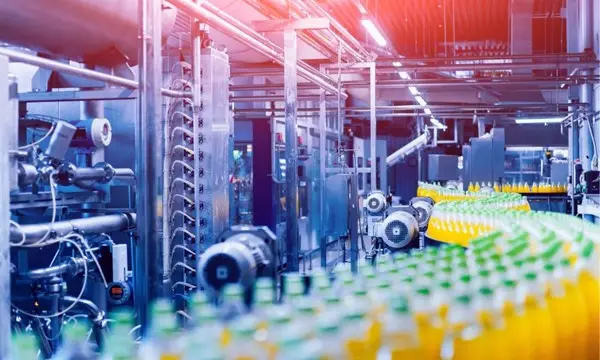
One of the most immediate and measurable benefits of automation is an increase in production output. Higher equipment utilization also helps manufacturers respond to demand fluctuations without adding production shifts or expanding facilities. The business case for automation continues to strengthen. According to the International Federation of Robotics (IFR), manufacturers worldwide installed more than 540,000 industrial robots in a single year, demonstrating continued investment in automation to improve productivity, quality, and operational resilience. For operations leaders, this translates into better asset performance and improved return on capital investments.
As demand patterns shift faster than ever, smart manufacturing helps ensure that companies can meet high-volume production targets without compromising performance.
Improved product quality and consistency
Manual operations are vulnerable to human error, inconsistencies, and variability. In contrast, industrial automation brings precision, repeatability, and advanced quality control to every step of the production line. For consumer-packaged goods, where uniformity is key to brand trust and regulatory compliance, this consistency helps protect brand reputation and maintain compliance.
Advanced automation technologies also enable real-time quality checks, using sensors and AI to detect defects early, reduce rework, and protect the integrity of the final product.
Lower production costs over time
While the upfront investment in automation for consumer goods manufacturing can be significant, the long-term ROI is substantial. Automated systems reduce labor costs, waste, and energy usage, leading to lower cost per unit and more sustainable operations.
Smart factory systems also help optimize resource use, schedule maintenance proactively, and prevent costly downtime, allowing manufacturers to do more with less.
Safer work environments
Repetitive, physically demanding, and hazardous tasks are common in consumer-packaged goods manufacturing. By automating these processes, companies significantly reduce the risk of injury and improve workplace safety.
Robots can handle heavy lifting, high-heat environments, or repetitive actions, freeing human workers to focus on supervision, quality, and innovation. This shift not only reduces incidents but also boosts employee morale and retention.
Flexibility to handle constant change
SKU proliferation, shorter product runs, seasonal demand, promotional packaging, retailer requirements, and quick changeovers are everyday realities for consumer goods manufacturers. Production lines need to shift quickly without sacrificing output, quality, or efficiency. Automation provides that flexibility by enabling manufacturers to reconfigure equipment, adjust production volumes, and move between products or packaging formats with less downtime.
Modern Industry 4.0 systems take that flexibility even further by connecting machines, data platforms, and analytics. With better visibility into line performance, changeover time, quality trends, and capacity, manufacturers can scale production or pivot when demand changes, without major disruption.
The World Economic Forum notes that manufacturers using advanced digital technologies and connected operations have demonstrated significant improvements in productivity, sustainability, and operational agility. These results highlight the value of combining automation with real-time data to respond more quickly to changing market conditions.
A smarter, more competitive future
Automation isn’t just about robotics. It’s about building an interconnected smart manufacturing environment. From digital twins and predictive analytics to IoT-enabled equipment, manufacturers are now leveraging data in real time to make smarter decisions.
Companies that embrace Industry 4.0 principles can improve visibility, responsiveness, and long-term competitiveness. For consumer-packaged goods manufacturers, automation is becoming the foundation for more agile, future-ready operations.
Why does choosing the right automation partner matter?
Standard equipment can be a good fit when the process is simple, stable, and already well defined. But consumer goods operations often have unique space constraints, product handling requirements, packaging formats, compliance needs, and future growth plans. A custom automation partner can design around those realities instead of forcing your production line to adapt to a one-size-fits-all machine.
For manufacturers planning long-term growth, the value is not just the equipment itself; it is the engineering thinking behind it. The right partner can evaluate the full production environment, identify the right level of automation, integrate new systems with existing assets, and build flexibility into the solution from the start. That helps manufacturers avoid costly workarounds, reduce integration risk, and create automation that supports how their operation runs.
| Standard equipment | Custom automation solutions |
| Best suited to common, repeatable applications with limited variation. | Designed around specific products, processes, space constraints, and growth goals. |
| May require manufacturers to adjust workflows to fit the machine. | Built to support the way the operation actually runs, including upstream and downstream requirements. |
| Often faster to purchase when the need is simple and clearly defined. | Provides engineering support to define the right solution before investment decisions are made. |
| Can create integration challenges with existing equipment or data systems. | Can be engineered to connect with existing assets, controls, and smart manufacturing systems. |
| May have limited flexibility when products, packaging, or production volumes change. | Can be designed for future flexibility, scalability, and product changeovers. |
The benefits of automation in consumer-packaged goods manufacturing are too powerful to ignore. Whether you’re looking to increase throughput, ensure consistent product quality, improve safety, or reduce costs — industrial automation is the key to achieving those goals.
Build an automation strategy that fits your future
Consumer goods manufacturing continues to evolve as customer expectations, product complexity, and market conditions change. Automation gives manufacturers the flexibility to respond while improving productivity, quality, and operational resilience.
Research shows that manufacturers adopting digital and automation technologies are better positioned to improve operational performance while increasing resilience against supply chain disruptions and workforce challenges. For consumer goods manufacturers, that means automation is becoming a strategic investment, not simply an operational upgrade.
Manufacturers that invest in automation today are better positioned to adapt to changing consumer expectations, introduce new products faster, and build more resilient operations over the long term.
Article updated July 2026
FAQs
Frequently asked questions
What does automation typically cost for a consumer goods production line, and how long is the payback period?
Automation costs vary depending on the complexity of the process, the level of customization, and the equipment involved. A simple packaging or palletizing cell requires a much smaller investment than a fully integrated production line with robotics, vision systems, and data integration. Manufacturers should evaluate the total return on investment, including higher throughput, improved quality, reduced waste, lower labor costs, and less unplanned downtime.
Many automation projects achieve payback within one to three years, although timelines vary based on production volume and operational goals. A detailed assessment helps identify where automation will deliver the greatest value.
Which processes in consumer goods manufacturing are best suited to automation first (packaging, filling, palletizing, inspection)?
The best place to begin depends on your production challenges, but many manufacturers start with repetitive, labor-intensive, or quality-critical processes. Packaging, palletizing, material handling, filling, labeling, and automated inspection often provide quick operational benefits because they improve consistency while reducing manual effort. Manufacturers experiencing labor shortages may prioritize tasks that are difficult to staff, while those focused on quality may begin with vision inspection systems.
Evaluating the entire production line helps identify bottlenecks and determine where automation will have the greatest impact on productivity, quality, and return on investment.
How do smart manufacturing technologies like AI vision and digital twins improve quality control on a consumer goods line?
AI-powered vision systems can inspect products in real time, identifying defects, labeling errors, or packaging inconsistencies that may be difficult to detect manually. This improves product quality while reducing scrap, rework, and customer complaints. Digital twins complement these systems by creating virtual models of production equipment or entire lines, allowing manufacturers to simulate changes, optimize processes, and identify potential issues before they affect production.
Together, these technologies provide greater visibility into manufacturing performance, helping teams make faster, data-driven decisions that improve quality, efficiency, and overall operational reliability.
How does automation help CPG manufacturers respond to labor shortages and rising labor costs?
Automation helps manufacturers maintain production even when skilled labor is difficult to recruit or retain. Automation also supports more predictable production, reduces overtime, minimizes errors, and improves workplace safety. As labor costs continue to rise, investing in automation helps manufacturers improve operational efficiency and build a more resilient production environment that can adapt to future workforce challenges.
Explore the possibilities
Ready to improve productivity, product quality, or production flexibility? Book a discovery call to learn how Eclipse Automation helps consumer goods manufacturers design and implement automation solutions that support long-term growth.
Related articles and insights
-
How smart traceability can boost efficiency and fix problems before they happen
Modern traceability digitally links components across every stage of assembly. Read More
-
Assembly line automation: 5 benefits for manufacturers
Stay competitive by embracing innovation with assembly line automation. Read More
