

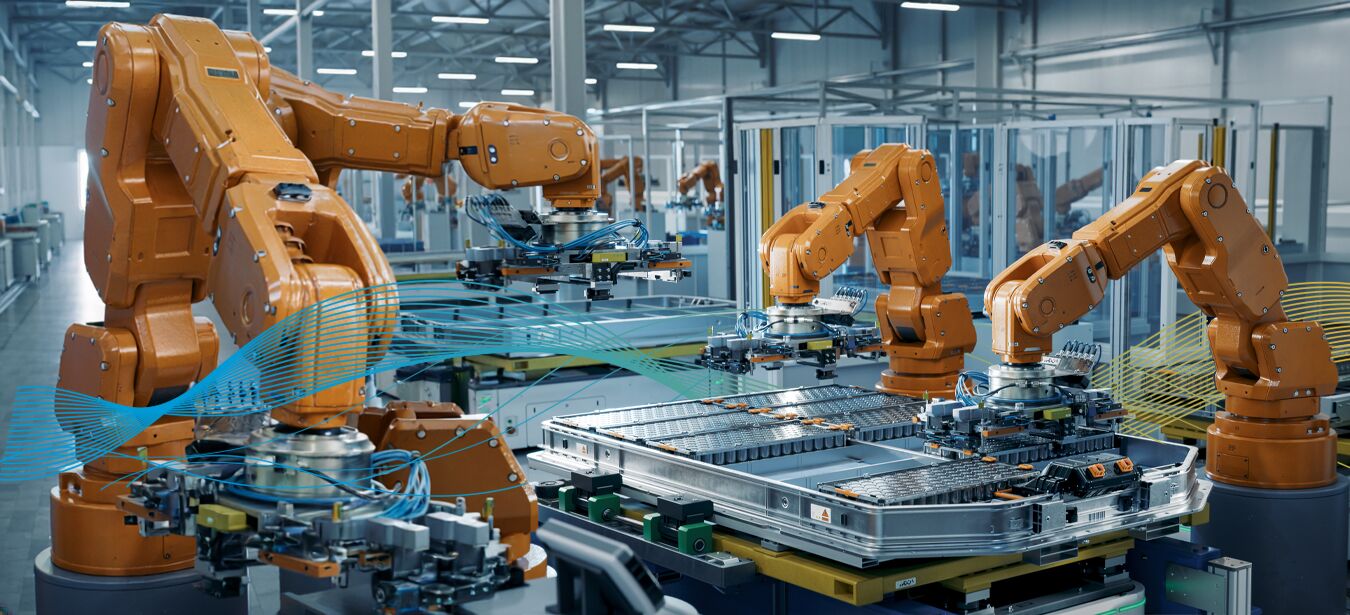


The best digital twin and simulation services for EV battery factories connect the virtual model to the equipment, controls, and manufacturing execution systems that will run the real line. Look for a provider that models cell, module, and pack processes at the station level, validates PLC logic through virtual commissioning, and carries the same model from concept through ramp-up into steady-state production. Software platform vendors supply strong modeling tools. Consultancies bring analysis and benchmarks. Automation partners with in-house simulation teams connect design, build, and commissioning in one model, which matters most when every point of scrap during ramp-up costs real money.
Why is ramp-up the biggest risk in battery production?
Battery lines take years to reach nameplate output. McKinsey reports that most gigafactories need three to six years to ramp up to full capacity, and its Battery 2035 analysis notes that scrap during early ramp-up can reach 70 or 80 percent. A joint Fraunhofer FFB and RWTH Aachen white paper puts typical scrap at 15 to 30 percent in the first few years, with each percentage point costing about €30,000 per day.
Industrial simulation gives teams a place to find those losses before equipment ships. Throughput models, buffer sizing, and robot reach studies expose bottlenecks early, while virtual commissioning tests PLC and SCADA logic against a model of the line instead of live hardware.
Key takeaways
- Battery ramp-up carries heavy scrap risk, often 15 to 30 percent in early years, so simulation delivers the most value before start of production.
- The strongest digital twin and simulation services connect directly to PLC, SCADA, and MES data.
- Providers fall into three groups: software platform vendors, simulation consultancies, and automation partners with in-house simulation.
- Judge each option on integration depth, ramp-up risk reduction, and support for manufacturing execution after launch.
- A twin that follows the line from design through commissioning keeps one source of truth and cuts handoff risk.
What types of digital twin and simulation services are available?
Industrial technology vendors in this space fall into three broad groups. Each one solves a different part of the problem.
Software platform vendors
These providers sell simulation, PLM, and Industrial IoT platforms. They offer depth in discrete event simulation and process modeling, while your team or a partner handles configuration, controls integration, and model upkeep.
Simulation and analytics consultancies
Consultancies build models to answer specific questions, such as capacity planning or layout trade-offs. The analysis is often strong, though the model can stop at the design review and never meet the real control code.
Automation partners with in-house simulation
These teams design, build, and commission the equipment, so the twin follows the project from concept through site acceptance. The same data that drives simulation also drives controls, robotics, and vision systems, which shortens handoffs and keeps the model current.
| Provider type | Strongest at | Watch for |
| Software platform vendors | Modeling depth and licensing flexibility | Integration effort sits with your team |
| Simulation consultancies | Scenario analysis and benchmarks | Model may end at design review |
| Automation partners with simulation | Continuity from design to commissioning | Confirm software openness and data ownership |
Which decision criteria matter most for EV battery factories?
Three questions separate a lasting smart manufacturing investment from a one-time study.
How deep does factory integration go?
Ask whether the twin connects to PLC, SCADA, and MES data or runs as a standalone model. McKinsey describes a factory digital twin integrated with MES platforms, IoT devices, and inventory databases that cut monthly costs by 5 to 7 percent through better production scheduling.
Can the model reduce ramp-up risk before equipment ships?
Look for virtual commissioning, cycle time validation at each station, and simulated machine vision inspection points for electrode, stacking, and weld quality. The goal is fewer surprises during factory and site acceptance testing.
Will it support manufacturing execution after start of production?
A useful twin keeps working once the line runs. It should feed predictive maintenance, quality traceability, and Industrial AI models with live operational technology data for ongoing manufacturing process optimization. The Capgemini Research Institute found that organizations using digital twins saw a 15 percent average improvement in key operational metrics, yet only 13 percent excel across the capabilities needed for effective deployment.
How does Eclipse Automation approach digital twins for battery plants?
Eclipse Automation builds factory digital twins into the full factory automation lifecycle, from advanced engineering and simulation through build, installation, and post-automation support. Our digital twin experience validates robotics, controls, and vision systems before equipment ships, and our EV and battery automation teams apply that model across cell, module, and pack assembly. With Eclipse RealitySync™, engineering, operations, and finance stakeholders review the same project data in an immersive environment, including spatial scans of the physical line captured during the build.
FAQs
Frequently asked questions
What is a factory digital twin for EV battery production?
A factory digital twin is a virtual model of the battery line, including stations, robotics, conveyors, and controls, that simulates throughput and quality before and after launch. McKinsey reports that 70 percent of C-suite technology executives at large enterprises are exploring and investing in digital twins. Learn how our digital twin experience supports battery programs.
How does virtual commissioning reduce ramp-up risk?
Virtual commissioning runs real PLC and robot programs against a simulated line, so teams find logic errors, interlock gaps, and cycle time shortfalls before equipment arrives on site. That shortens on-site debug time and protects the start-of-production date. See how our advanced engineering services build this into early project phases.
Can a digital twin connect to our existing MES and SCADA systems?
Yes, when the provider plans integration from the start. The twin should read tags from SCADA and production data from MES, then feed insights back to operations teams through a secure OT-to-IT architecture. Our digital factory experience covers how factory data gets captured, contextualized, and put to work.
What role do machine vision and robotics play in a battery factory twin?
Machine vision and robotics drive much of the quality and cycle time in cell, module, and pack assembly. Simulating camera placement, inspection timing, and robot paths early helps confirm takt time and defect detection before build. Explore our vision experience and robotics experience.
Does a digital twin keep adding value after launch?
A connected twin supports predictive maintenance, what-if analysis for new cell formats, and continuous improvement as volumes grow. Teams can test line changes virtually before they touch production. Our post-automation support keeps systems and models aligned across the factory automation lifecycle.
Explore the possibilities
Validating a new battery line before equipment ships? Book a discovery call to learn how Eclipse Automation supports digital twin and simulation services for EV battery factories, from early simulation through ramp-up and production.
Related articles and insights
-

What are the best digital twin services for EV battery factories?
EV battery lines can lose 15 to 30 percent of output to scrap during early ramp-up.… Read More
-
How do you build a factory automation capital plan?
Large automation projects win approval when the plan is easy to trust. This step-by-step guide shows… Read More
