



Factory automation has changed considerably over the past 25 years. The reasons manufacturers invest in it are familiar: increase throughput, improve quality, protect workers, address labor constraints, and build more predictable processes. But the problems manufacturers are asking automation to solve continue to evolve.
Some of that change is coming from industries scaling at a pace their existing production systems weren’t designed to support. Some is coming from established sectors adopting new technologies and processes. And in other cases, advances in robotics, vision, computing, and AI are making applications possible that were previously too complex or variable to automate effectively.
At Eclipse Automation, we’re seeing this play out in three very different areas: data center infrastructure, nuclear energy, and electronics recycling.
Each is changing for different reasons. Together, they offer a useful view into how the applications for factory automation are expanding.
Key takeaways
- Emerging industries are creating new manufacturing challenges and new opportunities for factory automation.
- AI growth is driving automation demand for data center infrastructure manufacturing and deployment.
- Nuclear growth and modernization are expanding automation applications across the industry’s lifecycle.
- New technologies are making complex processes, including electronics recycling, increasingly practical to automate.
Data centers: Scaling the physical infrastructure behind AI
The growth of AI is creating an enormous physical infrastructure requirement.
McKinsey estimates that global data center demand could nearly triple between 2025 and 2030, from approximately 82 gigawatts to 220 gigawatts. The firm also estimates that almost $7 trillion in global capital investment could be required to support data center infrastructure through 2030.
Behind that growth are physical products that have to be manufactured, assembled, tested, and deployed: server racks, power distribution equipment, liquid-cooling systems, cabling, and modular power and cooling infrastructure.
The requirements for that hardware are changing quickly, too. High-density AI racks introduce greater power and thermal loads, which means manufacturers need production processes capable of precise assembly, leak testing, torque verification, electrical testing, traceability, and other quality controls.
That’s creating new applications for factory automation.
We’re seeing opportunities to automate rack and server integration, power distribution and busbar assembly, liquid-cooling system assembly and testing, cable and fiber assembly, and test and inspection. Modular and prefabricated data center construction creates another opportunity to move work from the job site into a more controlled manufacturing environment.
The challenge isn’t simply building more infrastructure. Manufacturers have to determine how to increase production while maintaining the quality and reliability required for mission-critical equipment, often without a proportional increase in skilled labor.
For automation teams, that means looking closely at the production process and identifying where automation can meaningfully improve throughput, repeatability, testing, or workforce utilization.
Explore how factory automation is being applied to data center infrastructure manufacturing on our Data Centers page.
Nuclear energy: New applications across an evolving industry
Nuclear presents a different automation challenge.
The industry already has a long history with automation, but new investment is creating another period of change. According to the International Energy Agency, 78 GW of nuclear capacity is currently under construction across 15 countries, one of the highest levels seen in the past 30 years. Additional small modular reactors are also expected to begin construction in the near term, including in Canada.
As new reactor programs move forward alongside modernization, refurbishment, life extension, and decommissioning, manufacturers and operators have to solve challenges involving precision, repeatability, traceability, worker safety, complex system integration, and a limited pool of specialized talent.
Those requirements create opportunities to apply automation throughout the nuclear lifecycle.
At Eclipse, that work can include nuclear fuel and medical isotope manufacturing, inspection and maintenance tooling, hot cells, waste extraction and handling, modernization and refurbishment, new reactor and SMR programs, and decommissioning.
The business case for automation will look different across those applications. A system designed to reduce human intervention in a hazardous environment solves a different problem than one intended to increase production capacity. Inspection tooling may be driven by reliability and precision, while manufacturing automation may be driven by repeatability, traceability, and scale.
Understanding that distinction matters. The opportunity is to identify where automation can address a specific operational requirement within an industry where safety, reliability, and performance are critical.
Learn more about the role of automation across the nuclear lifecycle on our Nuclear Energy page.
Electronics recycling: Making difficult processes easier to automate
Electronics recycling shows another way new automation applications can emerge.
According to the Global E-waste Monitor 2024 from ITU and UNITAR, the world generated 62 million tons of e-waste in 2022, yet only 22.3% was documented as formally collected and recycled. By 2030, global e-waste generation is projected to reach 82 million tons.
Processing that material at industrial scale is difficult.
Unlike a conventional production line, recyclers can receive highly variable products with different designs, fasteners, adhesives, batteries, materials, and conditions. Components may contain hazardous materials, while valuable metals and other materials need to be identified and separated accurately enough to make recovery economically viable.
Advances in robotics, machine vision, sensing, and AI are changing what’s possible.
Automation applications can include robotic disassembly, vision- and sensor-based material identification, sorting, material recovery, testing and requalification, and traceability. Instead of relying on a highly standardized incoming product, these systems increasingly have tools available to identify and respond to variation.
That doesn’t mean every recycling process should be automated. Operators still need sufficient volume, a workable process, and a business case that justifies the investment.
But electronics recycling illustrates an important shift in factory automation: sometimes a new use case emerges because technology has made a difficult existing process more practical to automate.
Discover automation opportunities across the electronics recovery loop on our Circular Manufacturing & Electronics Recycling page.
The automation toolkit is changing, too
These three industries have very different production requirements, but they’re evolving at the same time as the technologies available to automation engineers.
Greater computing power, AI, advanced vision and sensing, robotics, simulation, and digital twins are changing how automation systems can be designed and what they can handle.
Eclipse CEO Steve Mai recently described this shift in an interview with TechNX, pointing to advances in computing, GPUs, digital twins, and the ability to connect and contextualize information across engineering and operations.
Eclipse is exploring many of those capabilities through Neuron, an initiative focused on connecting data, engineering tools, and digital technologies across our operations.
The important part isn’t any individual technology. It’s what those technologies allow manufacturers and automation engineers to do differently.
As those capabilities improve, the range of processes worth evaluating for automation grows with them.
What 25 years tells us about what comes next
After 25 years in factory automation, we’ve seen technologies change, industries change, and new manufacturing challenges emerge.
The fundamentals of making a good automation decision haven’t changed nearly as much.
Manufacturers still need to understand the process, identify the constraint or opportunity, determine what should and shouldn’t be automated, and build a business case around measurable results. From there, the automation has to be designed, integrated, validated, and supported in a way that works in the real production environment.
What’s changing is the range of problems that can enter that conversation.
Data centers need to industrialize the infrastructure supporting AI. Nuclear energy is moving through new builds, modernization, and new reactor technologies. Electronics recyclers are looking for ways to process increasingly large and complex material streams.
The next applications will come from industries and problems we may not be talking about yet. After 25 years, that may be one of the clearest lessons we’ve learned: the question isn’t simply how automation technology will change. It’s what new problems we’ll be able to solve with it.
FAQs
Frequently asked questions
What makes a process a good candidate for automation?
A strong automation opportunity starts with a clearly defined operational challenge. Volume, process repeatability, labor requirements, quality, safety, throughput, and potential return on investment should all be considered before determining whether automation is the right approach.
How can manufacturers identify new opportunities for automation?
Start with the process rather than the technology. Look for production constraints, repetitive or hazardous work, quality issues, capacity requirements, and processes that are difficult to scale. From there, manufacturers can evaluate whether available automation technologies can address the challenge and support a viable business case.
How are AI and other new technologies expanding factory automation?
AI, machine vision, sensing, robotics, simulation, and digital twins can help automation systems handle more complex information, greater product variation, and increasingly sophisticated processes. They can also improve how systems are designed, tested, and optimized before and after launch.
Does a new automation application require a completely new system?
Not necessarily. Depending on the process and existing equipment, manufacturers may be able to introduce automation in stages, retrofit a specific operation, or pilot an application before scaling. The right approach depends on the operational requirement, existing infrastructure, and expected return.
How should manufacturers evaluate automation in an emerging application?
Define the problem and desired outcome first, then assess technical feasibility, process variability, throughput requirements, integration needs, and economics. Early engineering and validation can help determine whether the application is ready for automation before committing to a full production system.
Explore the possibilities
Where could automation solve a new challenge in your operation? Book a discovery call to learn how we can help identify, evaluate, and develop automation solutions for emerging manufacturing applications.
Related articles and insights
-
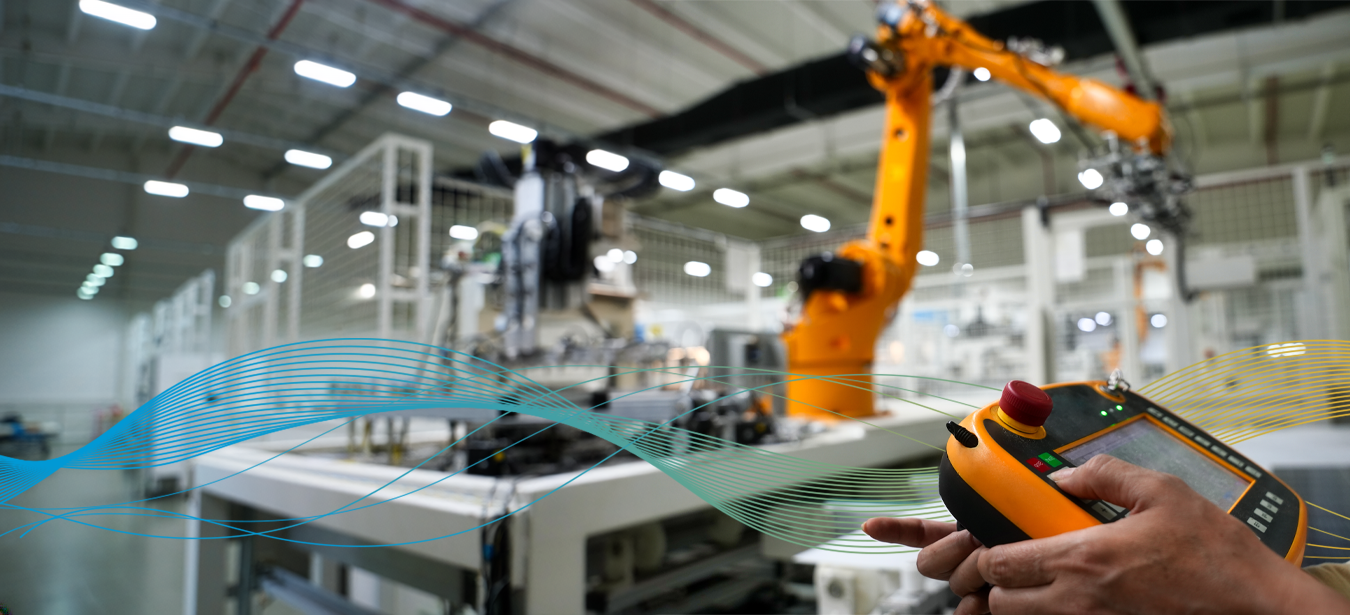
How emerging industries are creating new use cases for automation
Factory automation is finding new applications as industries scale, evolve, and adopt new technologies. From data… Read More
-
How to prevent automated assembly line commissioning delays
Automated assembly line commissioning delays start long before equipment reaches the plant floor. This step-by-step guide… Read More
