

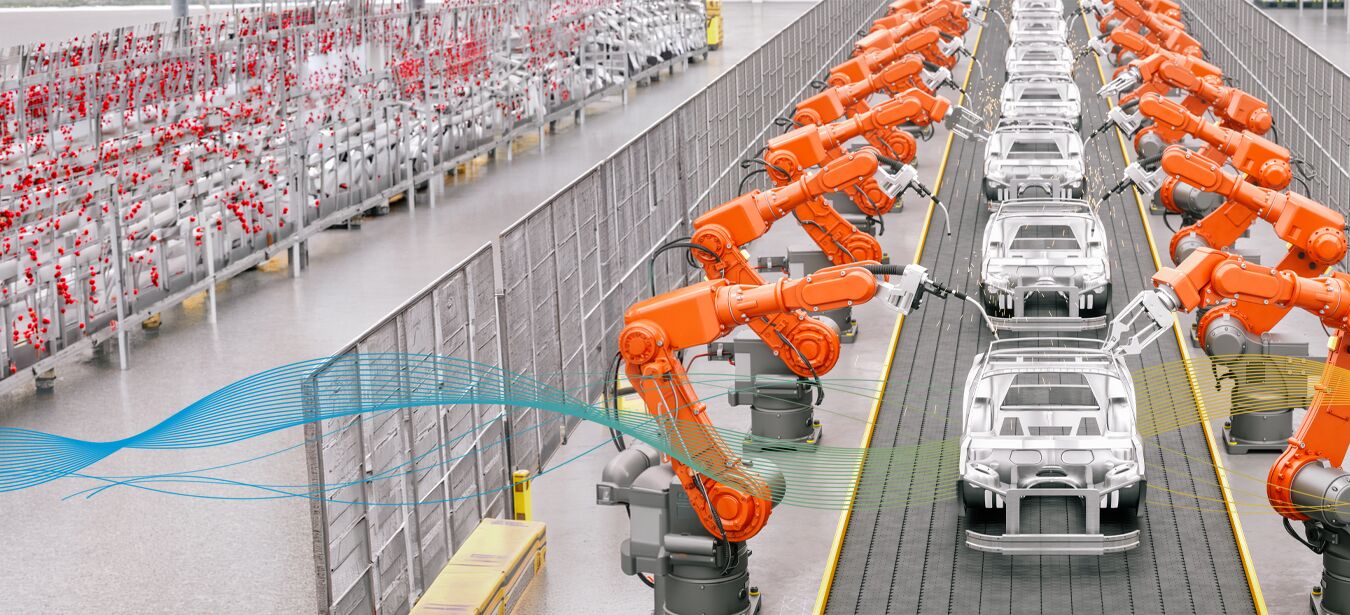


Scoping a large factory automation project starts with business outcomes and works backward to technology. Define the production targets you need to hit, baseline current performance, and bring engineering, operations, and IT into one scoping team from day one. Validate the concept in simulation or a digital twin before you commit capital, then sequence delivery in phases with clear funding gates. Close the plan with a support model for life after commissioning. That order matters. Teams that pick robots, vision systems, or software first tend to lock in assumptions that become expensive to change later. Industrial automation planning done well turns a multi-year capex bet into a series of smaller, verifiable decisions.
Why do large factory automation projects drift off scope?
Scale compounds risk. In a McKinsey and University of Oxford study of more than 5,400 projects, large IT projects ran 45% over budget on average and delivered 56% less value than predicted, with every added year of schedule raising cost overruns by 15%. Factory automation projects carry similar exposure, because PLC logic, MES, SCADA, and enterprise systems all have to meet on the plant floor at once. Investment keeps climbing anyway. Deloitte’s 2025 Smart Manufacturing Survey found 46% of manufacturers rank process automation as a top-two priority for the next two years, and 37% say the same of physical automation. The gap between ambition and delivery usually opens during scoping.
Key takeaways
- Start with measurable outcomes, such as throughput, OEE, yield, and labour hours, and let them drive every technology choice.
- Baseline current performance with real cycle-time, downtime, and scrap data before designing anything.
- Put engineering, operations, and IT on one scoping team with a single accountable executive.
- Validate layouts, cycle times, and integration in a digital twin before committing capital.
- Sequence delivery in gated phases and budget for support, data, and predictive maintenance after commissioning.
What are the steps to scope a large factory automation project?
How do you define outcomes before choosing technology?
Write down what success looks like in numbers: units per hour, OEE, first-pass yield, changeover time, or labour hours redeployed to higher-value work. Tie each target to a business case and a payback window. These targets become the filter for every later decision, from robot count to machine vision resolution.
How do you baseline the current state?
Collect cycle times, downtime by cause, scrap rates, and labour costs for each process in scope. Map the workflows and remove non-value-adding steps first, since automating waste only makes it faster. Document your operational technology estate as well: PLC platforms, network architecture, and any legacy equipment the new system must talk to.
Who needs a seat at the scoping table?
Engineering owns feasibility, operations owns throughput and staffing, and IT owns data, cybersecurity, and enterprise integration. Ownership is already split across these groups. Deloitte reports that 51% of smart manufacturing initiatives are led by operations leaders and 38% by technology executives. Name one accountable executive, then give each function sign-off on the requirements it owns. Agree early on where MES ends and the SCADA layer begins, and how Industrial IoT data will flow to the enterprise.
How do you validate the concept before committing capital?
Build the line virtually first. Robot, cell, and full-line simulation tests reach, cycle time, buffer sizing, and material flow before a single part is machined. Digital twins also give operators, engineers, and IT one shared model to review. Organizations in Capgemini research plan to increase digital twin deployment by 36% on average over the next five years, and the reason is practical: a change costs far less in a model than on the floor.
How should you sequence the rollout?
Break the program into phases with go and no-go gates. A common pattern runs from a pilot cell, to one full line, to replication across the plant or network. Prove each phase against the baseline before releasing the next tranche of capital. Scaling beyond the pilot remains the hard part of factory modernization, and it is one of three core themes in the World Economic Forum’s 2026 Global Lighthouse Network report, which now spans 223 sites across more than 30 countries.
How do you plan for life after commissioning?
Scope factory acceptance testing, site acceptance testing, training, spare parts, and support up front. Design the data infrastructure for predictive maintenance and Industrial AI use cases now, even if you deploy them in a later phase. Robotics fleets are growing fast. The International Federation of Robotics counted a record 5 million industrial robots operating worldwide in 2025, after more than 600,000 new installations that year, so treat maintenance capacity and skills as core scoping items.
What does a well-scoped project look like at kickoff?
A well-scoped manufacturing plant automation program reaches kickoff with five things in hand: approved outcome targets, a validated baseline, a cross-functional team with clear decision rights, a simulated concept, and a phased plan with funding gates. Teams that arrive with all five spend the build phase building. Teams that arrive without them spend it renegotiating requirements, which is where schedules slip and budgets grow. Good automation project management starts long before the first purchase order.
FAQs
Frequently asked questions
How long does it take to scope a large factory automation project?
Scoping usually takes weeks to a few months, depending on the number of lines, processes, and systems involved. The build that follows typically runs from several months to a year. See how each stage fits together in the Eclipse Automation factory automation lifecycle.
What are advanced engineering services?
Advanced engineering services are structured pre-automation services that help manufacturers assess, plan, and validate automation opportunities before significant capital investment. They include process assessments, simulation, digital twin feasibility studies, and ROI modelling. Learn more about Eclipse advanced engineering services.
How do digital twins reduce risk in factory automation projects?
A digital twin lets teams test layouts, cycle times, robot reach, and controls logic virtually, so design issues surface before equipment is built. It also gives engineering, operations, and IT a shared model for reviews. Watch how Eclipse applies digital twin technology.
How do I know if my plant is ready for automation?
Readiness depends on process stability, data quality, infrastructure, team alignment, and a clear business case. The Eclipse automation readiness checklist covers 10 questions and takes under five minutes to complete.
How do you align IT and OT on a factory automation project?
Bring IT and OT leaders into scoping from the start, assign clear ownership of data, network, and cybersecurity requirements, and define integration points between PLCs, SCADA, MES, and ERP early. Explore how Eclipse integrates MES and ERP across the automation lifecycle.
Explore the possibilities
Planning a large-scale factory automation project? Book a discovery call to learn how Eclipse Automation supports scoping, simulation, and phased delivery for large-scale industrial systems.
Related articles and insights
-

How to scope a large factory automation project
Large factory automation projects succeed or stall during scoping. This practical, step-by-step roadmap shows engineering and… Read More
-
Best industrial mobility providers compared
Choosing an industrial mobility provider shapes throughput for years. This guide compares robot OEMs, AGV specialists,… Read More
