
Tracey Thomas, Content Communications Specialist
Manufacturing and construction have long been seen as male-dominated fields.
That paradigm is shifting, but real progress still depends on visibility, mentorship, and leadership that makes space for more women to stay and grow.
In the latest episode of People B4 Machines, Stephanie Hun, Director of Business Development at FlatironDragados and mentor with Women in Manufacturing (WiM) Central Canada, joins host Amanda Cupido to talk about inclusion, confidence, and how to build workplaces where women can lead with impact.
In this article
- Why visibility and mentorship drive inclusion in construction and manufacturing
- How diverse teams make stronger decisions
- Barriers women still face, and how to address them
- Why progress depends on sponsorship, allyship, and confidence
- A link to listen to the full episode with Stephanie Hun
Listen to the full conversation
Hear Stephanie Hun’s full episode, Still a Man’s World, But Under Construction, and explore more stories on the human side of factory automation at peopleb4machines.com.
Visibility and mentorship open doors
Hun found construction through a temp job during university, a path that sparked her long-term interest in the industry. Early in her career, she was told to “blend in” and avoid drawing attention to her gender, a message many women still receive.
“By not being visible, you’re really hiding your power,” Hun said. “You’re not reinforcing the idea that women belong here.”
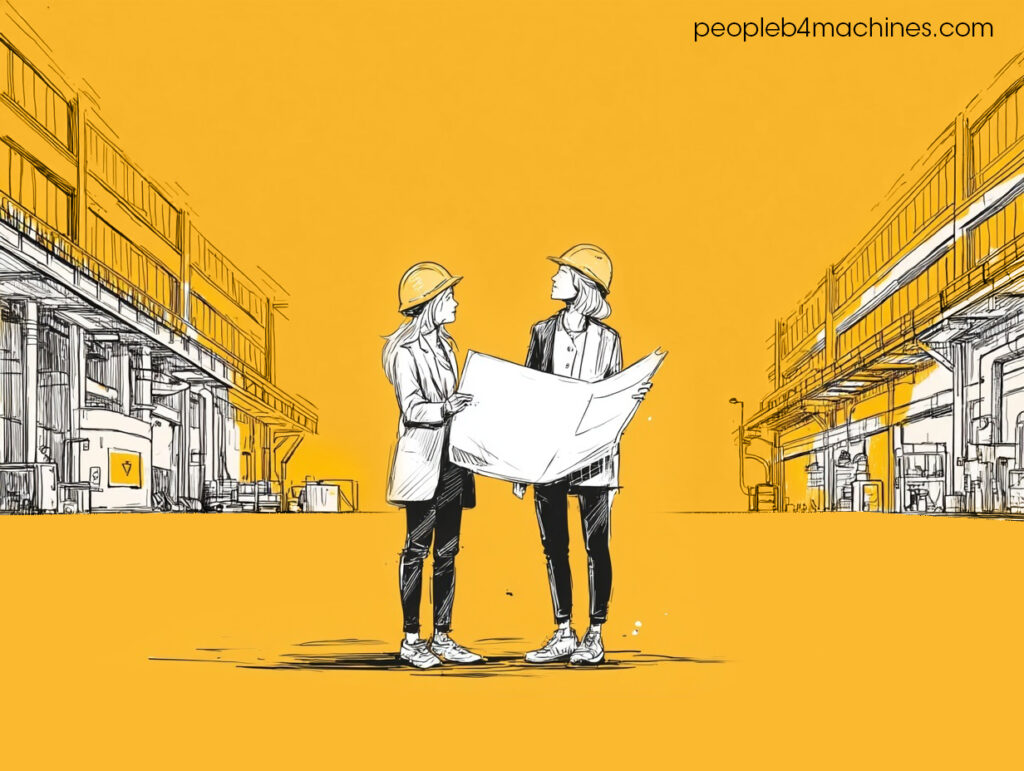
Mentorship, she explained, is one of the most effective ways to change that. It builds confidence and expands networks. It also creates access for women who may not see an obvious entry point.
Building teams where everyone contributes
Hun emphasized that inclusion shows up in how work environments are structured. If teams collaborate the same way they always have, newer voices struggle to stand out. Improving inclusion requires re-thinking how teams communicate, delegate responsibilities, and create room for different approaches.
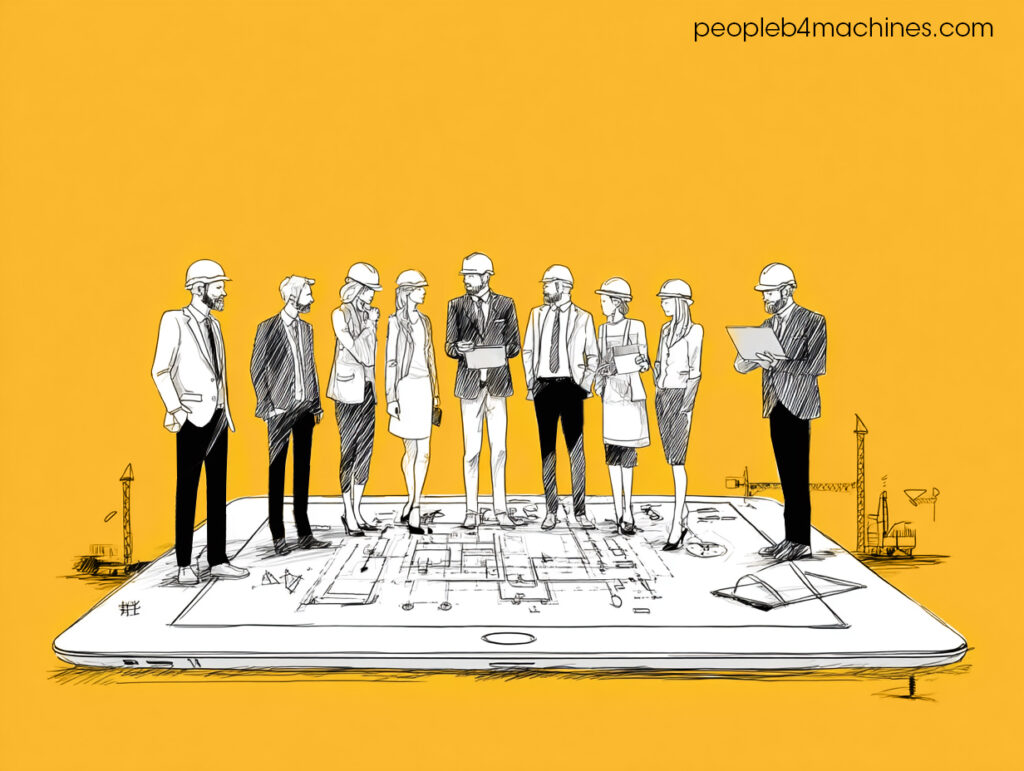
She has seen firsthand how diverse perspectives lead to stronger outcomes. When teams combine different experiences and problem-solving approaches, they anticipate risks earlier and make better decisions.
“We gravitate to people that are like us, but it becomes very homogenous,” Hun explained. “If you’re all thinking the same, there will be some blind spots.”
Challenging bias and culture
Despite progress, bias still shows up in subtle and persistent ways. Early in her career, Hun often found herself as the only woman in the room, saying she sometimes had to prove her capability twice.
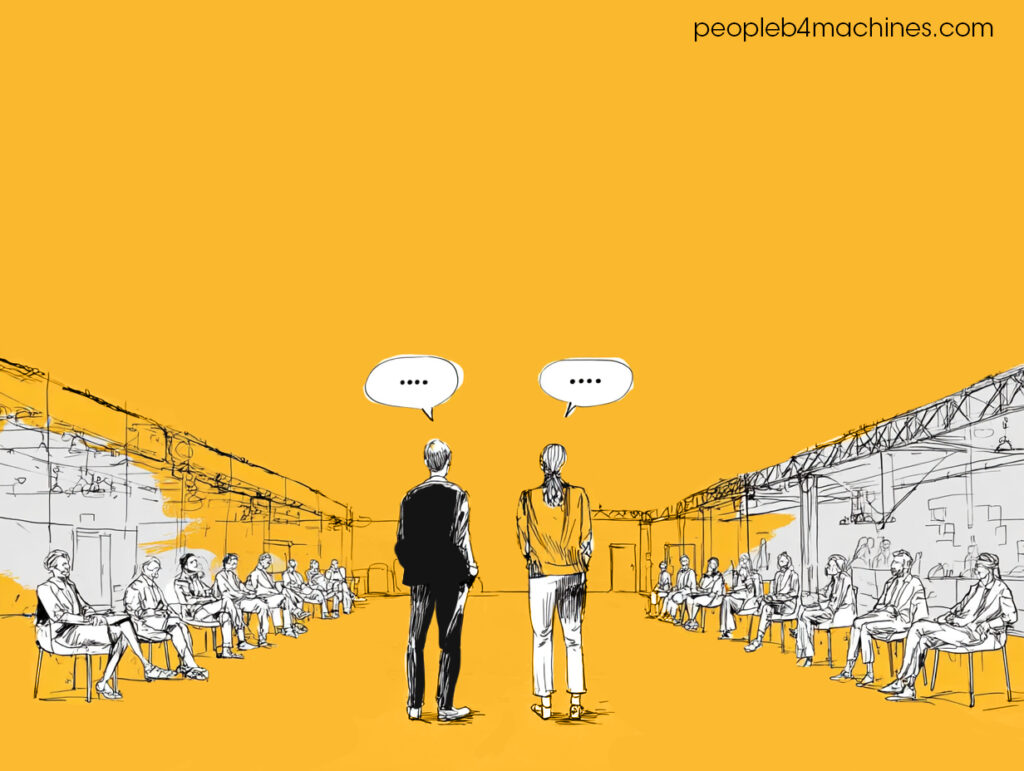
“We’re always more cautious about tone and word choice,” she said. “But if you use the same words in a more direct way, it can come across differently.”
Hun noted that addressing bias takes consistency and courage. It means raising the issue in a way that builds awareness rather than conflict, a steady approach that helps shift culture over time.
Hun also highlighted the role of allies, especially males in leadership positions.
“Most people at the top are still men,” she said. “We need them to be our allies, to bring us up even when we’re not in the room.”
Building a future where women can lead and stay
Hun sees a shift underway. More women’s organizations, industry networks, and community groups are creating platforms for professional growth. But the goal isn’t just representation.
Hun emphasized that the goal isn’t just attracting women, but creating conditions where they can stay, grow, and lead.
She encourages women to network widely, use social platforms to build their brand, and find the right mentorship fit.
“Think about where you want to be in three to five years,” she suggests. “There’s no right or wrong answer,” adding that the right support and mentorship can help make that path clearer.
For Hun, progress means an industry where women’s groups are no longer separate — because inclusion is the norm, not the exception.

How are you helping the next generation find their place in manufacturing? Strong mentorship builds strong teams. See how Eclipse Automation helps manufacturers create inclusive environments where people and ideas can grow together.