

Tracey Thomas, Content Communications Specialist
Resilience is often described as a response to disruption. In manufacturing, it’s better understood as a capability built over time. Leaders don’t eliminate uncertainty. They decide how to operate through it.
In this episode of People B4 Machines, Kevin Bowers, Vice President of Research at the Association for Manufacturing Technology (AMT), joins host Amanda Cupido to discuss how manufacturers can move forward without certainty.
The conversation explores leadership responsibility, technology adoption, and why adaptability matters more than predictability.
In this article
- Why certainty is a false goal in manufacturing
- How resilience is built by adapting forward
- Why many manufacturers already have the technology they need
- Where leadership alignment makes the biggest difference
- One no-regrets move manufacturers can take today
Listen to the full conversation
Hear the full episode, Finding certainty in uncertainty in manufacturing in North America, and explore more conversations on the human side of factory automation at peopleb4machines.com.
Certainty is a false goal
Manufacturers often look for certainty when planning investments or setting strategy. Stable policies. Predictable markets. Clear timelines. The issue is that those conditions rarely hold for long.
External factors such as trade policy, geopolitics, and global disruption are hard to predict. Internally, long asset lifecycles, siloed decisions, and aging infrastructure can add friction. Waiting for clarity before acting can slow progress and increase risk.
In this episode, Bowers urges manufacturers to recognize uncertainty as a constant rather than an exception. By accepting that reality, leaders can plan more realistically and avoid tying decisions to assumptions that may not hold.
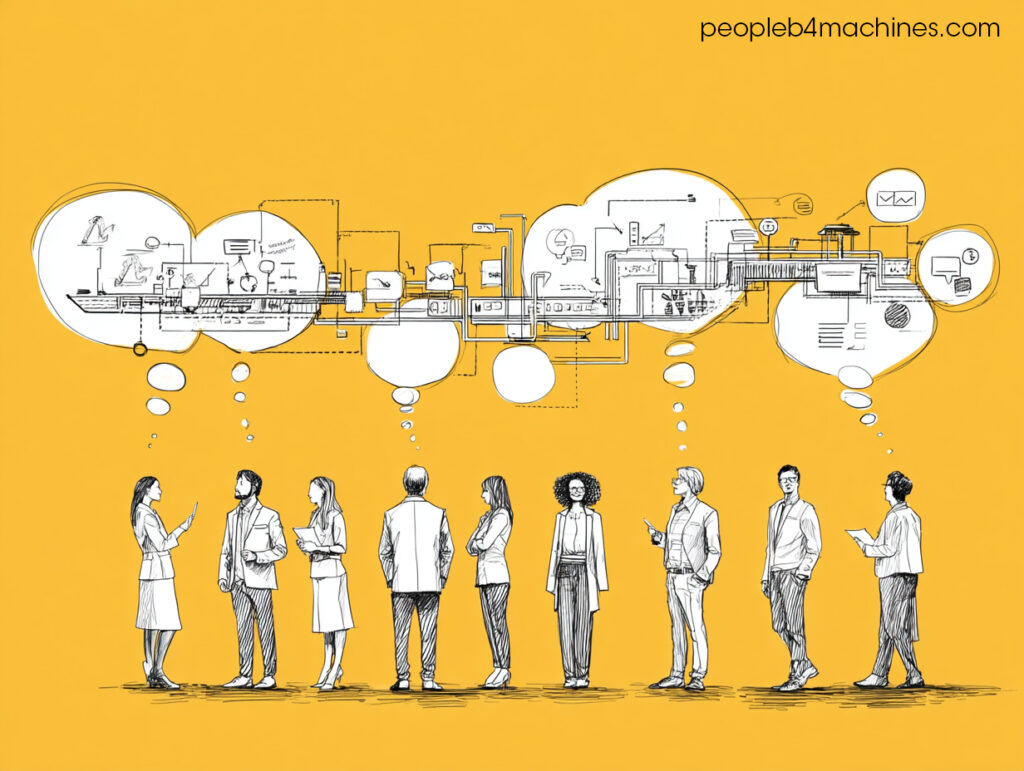
Resilience means adapting forward
“Resiliency is not bouncing back, it’s adapting forward,” he said.
On the factory floor, that adaptability depends on systems that support consistency through change. Automation, robotics, and connected equipment help teams maintain performance even when conditions shift.
At the leadership level, resilience requires intent. Executives need to set direction, communicate priorities, and give teams the space to adopt new ways of working.
Technology supports resilience when it is paired with alignment and follow-through.
The technology already exists
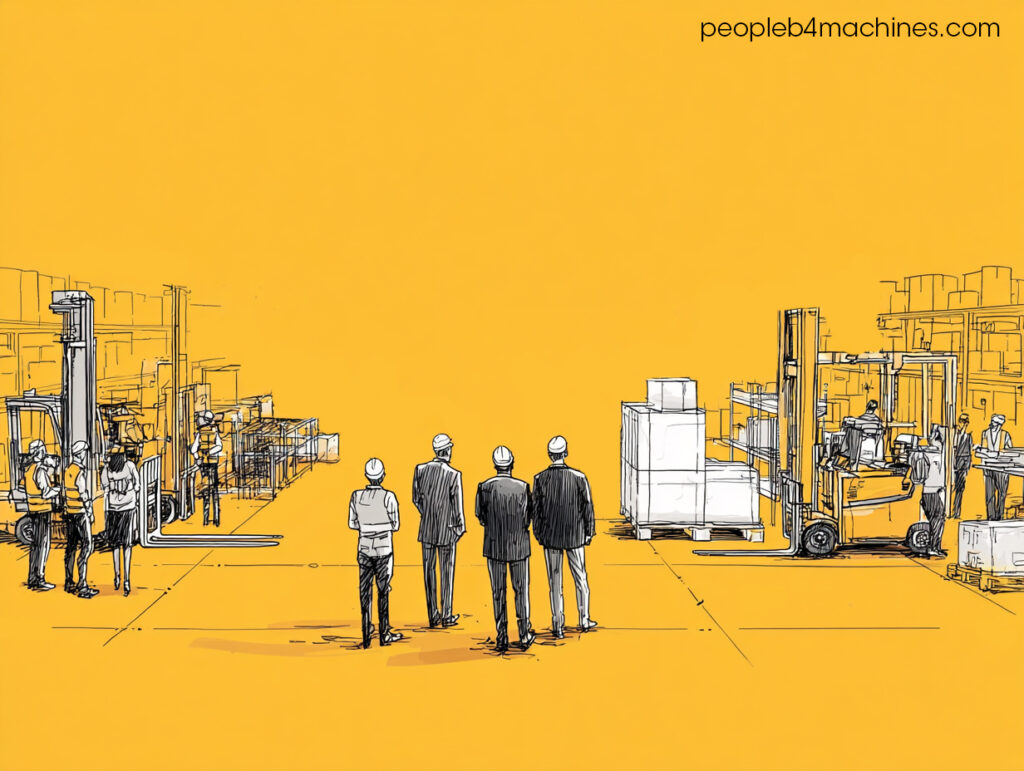
Many of the technologies associated with modern manufacturing are not new. Data analytics, predictive maintenance, and connected systems have been around for years.
What slows adoption is often the reality of long asset lifecycles. Manufacturing equipment can remain in service for decades, and older machines do not always integrate easily with modern platforms. Over time, technical debt accumulates and makes any sort of change feel complex or risky.
Bowers acknowledges these constraints, particularly for small and medium manufacturers, and points to an opportunity. Incentives, depreciation rules, and a growing ecosystem of solution providers have lowered barriers that once limited experimentation.
He encourages a focused approach. Rather than chasing trends, manufacturers should define clear problems and test practical use cases that support long-term goals.

Change must come from the top
Frontline teams are often the ones to identify improvements. They see inefficiencies, workarounds, and areas where technology could help. Without executive support, those ideas become difficult to enact.
Meaningful change starts with leadership, says Bowers. Investment decisions, incentive structures, and consistent communication shape whether new systems are adopted or sidelined. Without alignment from the top, digital initiatives tend to improve isolated areas rather than overall performance.
When leadership commits, teams are more likely to integrate new tools into daily work and move beyond pilot projects. That alignment allows organizations to shift from incremental improvements to sustained progress.
A no-regrets move
When asked to recommend one action manufacturers can take today, Bowers kept it simple: “Connect your equipment to the cloud.”
Connected equipment generates data that supports better decisions over time. That data becomes a foundation for automation, analytics, and future AI initiatives. In many cases, its long-term value exceeds that of the equipment itself.
Bowers summed it up with a familiar reminder: “The best time to plant a tree was 20 years ago. The second-best time is now.”
Leading through uncertainty
Manufacturing leaders will continue to deal with incomplete information, shifting conditions, and long-term trade-offs.
As Bowers reinforced during the episode, resilience is built through preparation. Organizations that invest with purpose and build adaptable systems are better positioned to perform through whatever comes next.

Navigating uncertainty in factory operations? Resilience starts with informed decisions and systems designed to evolve. See how Eclipse Automation supports that journey.